

Greece boasts over 130 million olive trees. More than 50 varieties are grown across the country. This shows how important olive trees are in Greece, a tradition that goes back thousands of years.
Exploring olive tree varieties is fascinating. Greece’s unique geography and climate have led to many different types of trees. Each one has its own special traits.
Key Takeaways
- Greece is home to over 130 million olive trees.
- More than 50 olive varieties are cultivated across the country.
- Olive cultivation in Greece dates back thousands of years.
- The country’s unique geography and climate have given rise to diverse cultivars.
- Olive tree varieties have distinct characteristics and uses.
Introduction to Greek Olive Cultivars
Greek olive cultivars have shaped the country’s cuisine and cultural identity for millennia. The variety of Greek olive species shows the country’s rich agricultural heritage. It also highlights Greece’s leading role in producing high-quality olive oil.
A Brief History of Olive Cultivation
Olive cultivation in Greece goes back to the Minoan civilization. Evidence of olive oil production from that time exists. The olive tree symbolizes peace, prosperity, and wisdom in Greek culture.
Over the centuries, olive cultivation has evolved. It has been shaped by traditional practices and innovations. This evolution has made Greek olive species diverse.
Importance of Olive Cultivars in Greece
Greek olive cultivars are vital to the country’s economy, cuisine, and culture. Olive oil, mainly from Koroneiki and Kalamata cultivars, is a big part of Greece’s agricultural exports. It’s also a key ingredient in Greek cooking.
These cultivars are more than just a product. They are part of traditional Greek practices and celebrations. Keeping these traditions alive is key to the success and diversity of Greek olive species.
The Role of Climate in Olive Growth
Exploring Greek olives shows how climate and geography matter. Greece’s Mediterranean climate is perfect for growing olives.
How Geography Affects Olive Varieties
Greece’s varied landscapes, from the Peloponnese’s sun to Crete’s mild winters, shape olive types. For example:
- Mountainous areas like Kalamata are home to strong olive varieties.
- Coastal spots with gentle weather are great for growing Koroneiki olives.
This variety in geography leads to many olive types in Greece. Each has its own taste and traits.
Seasonal Influences on Olive Yield
Seasons also affect olive farming. The Mediterranean climate with hot summers and cool winters guides olive tree growth.
Important seasonal factors for olive yield are:
- Spring rains help olives grow well.
- Summer heat speeds up olive ripening.
- Fall harvests, influenced by weather, affect olive quality and quantity.
Knowing these seasonal impacts helps farmers improve their harvests. It also shows the effort behind Greece’s best olives.
In summary, Greece’s geography and climate are key to its olive success. They lead to a wide variety of Mediterranean olive cultivars loved globally.
Popular Greek Olive Cultivars
Greek olive cultivars are known for their rich flavors and versatility. Greece has many olive cultivars, each with unique characteristics. We’ll look at some popular ones, including their origins, flavors, and uses.
Kalamata: The Jewel of the Peloponnese
The Kalamata olive is famous and loved in Greece. It comes from the Peloponnese and is dark purple with an almond shape. People use them in salads, on bread, and in traditional Greek dishes.
“Kalamata olives are a staple in Greek cuisine, with a rich, fruity flavor that makes any dish better.”
Koroneiki: The King of Olive Oils
Koroneiki is prized for its high-quality olive oil. It’s grown a lot in Greece, mainly in the Peloponnese. These small olives have a lot of oil, making them perfect for top olive oils.
For more info on Greek olive varieties, check out this guide.
Manzanilla: A Taste of the Mediterranean
Manzanilla olives are popular in Greece for their crisp texture and mild taste. They’re great as table olives or in cooking. Manzanilla olives are common in many Greek homes.
Arbequina: A Catalan Influence into Greece
Arbequina comes from Catalonia but is grown in Greece too. These small olives make high-quality oil with a fruity taste. Arbequina is becoming popular in Greece for its use in modern olive oil making.
| Cultivar | Origin | Primary Use |
|---|---|---|
| Kalamata | Peloponnese, Greece | Table Olives |
| Koroneiki | Peloponnese, Greece | Olive Oil Production |
| Manzanilla | Mediterranean Region | Table Olives and Cooking |
| Arbequina | Catalonia, Spain (cultivated in Greece) | Olive Oil Production |
Unique Characteristics of Each Cultivar
The world of Greek olives is full of different types, each with its own special features. As I look into these olive tree varieties, I’m amazed by their complexity and richness.
Flavor Profiles of Different Olives
Greek olive cultivars have a wide range of flavors. For example, the Koroneiki has a sweet and fruity taste, loved by olive oil makers. The Kalamata olive, on the other hand, is known for its rich, full-bodied flavor, seen as the best of Greek olives.
The Manzanilla offers a crisp, refreshing taste. The Arbequina is famous for its buttery and smooth flavor. These flavors add to the culinary joy and show the variety of Greece’s geography and climate.
Ripening Patterns and Harvesting Techniques
The ripening and harvesting of Greek olives differ a lot. For instance, Koroneiki and Kalamata olives are picked when ripe for their best taste. Some are picked earlier for a green, slightly bitter taste.
Harvesting methods also vary. Some farmers use traditional hand-picking, while others use machines. The choice depends on the type, the land, and the farmer’s style.
Knowing these unique traits helps us appreciate the variety of Greek olives. Whether you love olives or are new to them, exploring these types is a fun journey.
Health Benefits of Greek Olives
Greek olives are packed with nutrients, providing many health benefits. They are a key part of the Mediterranean diet. This diet is known for improving health and well-being.
Nutritional Value of Olive Varieties
Each type of Greek olive has its own nutritional perks. Kalamata olives are full of monounsaturated fats, which are good for the heart. Koroneiki olives, on the other hand, are rich in antioxidants. These help fight off oxidative stress.
Greek olives also have fiber, vitamin E, and minerals like copper and iron. Here’s what you get in 100 grams of Greek olives:
| Nutrient | Value per 100g |
|---|---|
| Energy | 115 kcal |
| Fat | 11g |
| Carbohydrates | 4g |
| Fiber | 3g |
Antioxidants and Heart Health
Greek olives are full of antioxidants, which are great for health. These antioxidants fight inflammation and protect cells from damage. This can help prevent chronic diseases. Regularly eating Greek olives can lower the risk of heart disease. They help improve cholesterol levels and blood pressure.
Adding Greek olives to your diet is a smart move for better nutrition. You can enjoy them in salads, as toppings, or as a snack. Their health benefits make them a fantastic choice for a healthy lifestyle.
The Olive Oil Production Process
Olive oil’s journey from tree to table is complex and showcases Greece’s best olives. Making high-quality olive oil involves several key steps. These steps, from harvesting to bottling, need careful attention.
From Tree to Table: The Journey of Olive Oil
The first step is harvesting olives in the early morning to avoid heat. Then, the olives go to the mill for cleaning and crushing. This makes a paste from which oil can be extracted.
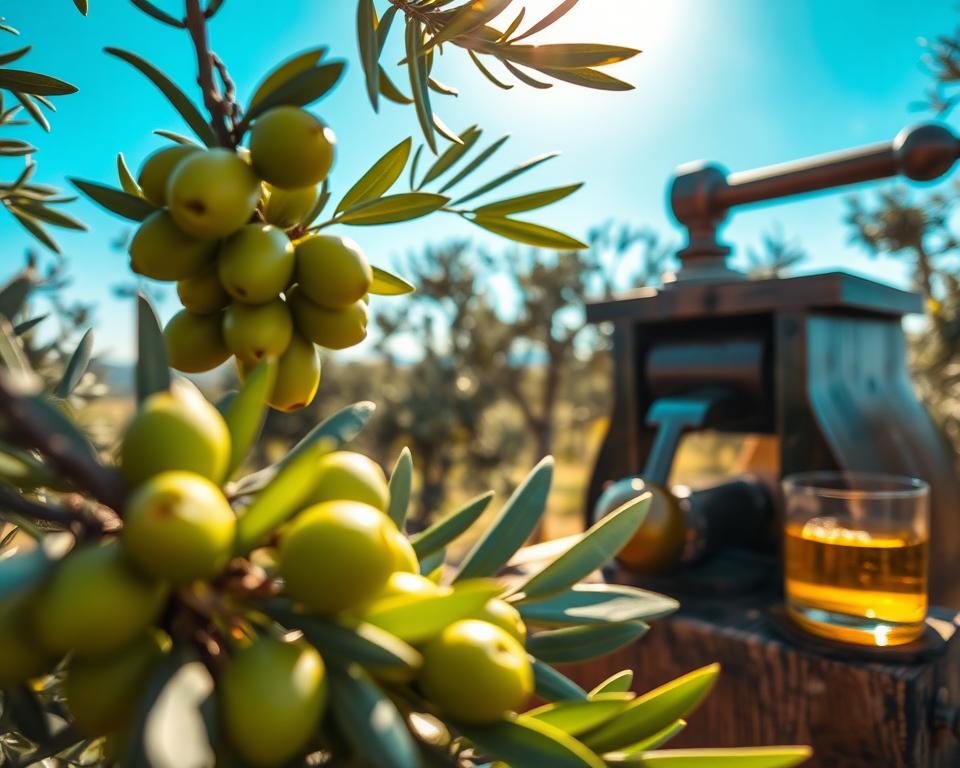
The extraction process is vital. There are methods like cold-pressing and centrifugation. Cold-pressing is seen as traditional and keeps the oil’s quality and taste.
The Importance of Cold-Pressing Techniques
Cold-pressing extracts oil from olives without heat. This keeps the oil’s natural flavor and nutrients. It’s considered better because it makes oil with a clearer taste.
- Preserves flavor and aroma: Cold-pressing keeps the olives’ natural taste and smell.
- Higher quality oil: Without heat, the oil stays better, making it of higher quality.
- Nutritional benefits: Cold-pressing also keeps the oil’s nutrients, like antioxidants and vitamins.
Using cold-pressing, producers of the best olives in Greece make oils that taste great and are good for you.
Pairing Olive Cultivars with Food
Greek olives are very versatile. They can make many Mediterranean dishes better. Their unique tastes and textures go well with different foods, from old recipes to new ones.
Perfect Matches for Mediterranean Dishes
There are classic pairings of olive cultivars with Mediterranean dishes. Kalamata olives, with their rich flavor, are great with grilled octopus or on a Greek salad. Manzanilla olives, with their mild taste, are good with chicken or fish.
- Kalamata Olives: Ideal for Greek salads, pasta dishes, or as a tapenade.
- Koroneiki Olives: Great for olive oil production, but also delicious as a table olive, pairing well with charcuterie.
- Manzanilla Olives: Excellent for stuffing or as a snack, pairing well with cheeses and cured meats.
Exploring Olive-Infused Recipes
Olive-infused recipes are a fun way to use Greek olives in cooking. Making an olive tapenade with different olives is a favorite of mine. It’s tasty on crackers or bread and great for marinating meats or veggies.
Here are some creative ideas for olive-infused recipes:
- Olive and Herb Crusted Salmon: A flavorful dish where olives are blended with herbs and used as a crust for salmon fillets.
- Olive Tapenade Stuffed Chicken: Chicken breasts stuffed with a mixture of olive tapenade, cheese, and herbs, then baked to perfection.
- Olive and Artichoke Pasta: A hearty pasta dish featuring olives, artichoke hearts, and a tangy sauce.
Trying out different olive cultivars and recipes can lead to new flavors. Whether making a traditional Mediterranean dish or a modern meal, Greek olives add depth and richness.
Cultivation Techniques Across Regions
Greek olive farmers use many techniques, from ancient groves in Crete to modern farms in the Peloponnese. These methods vary due to regional traditions and practices. This diversity makes Greek olive cultivation unique.
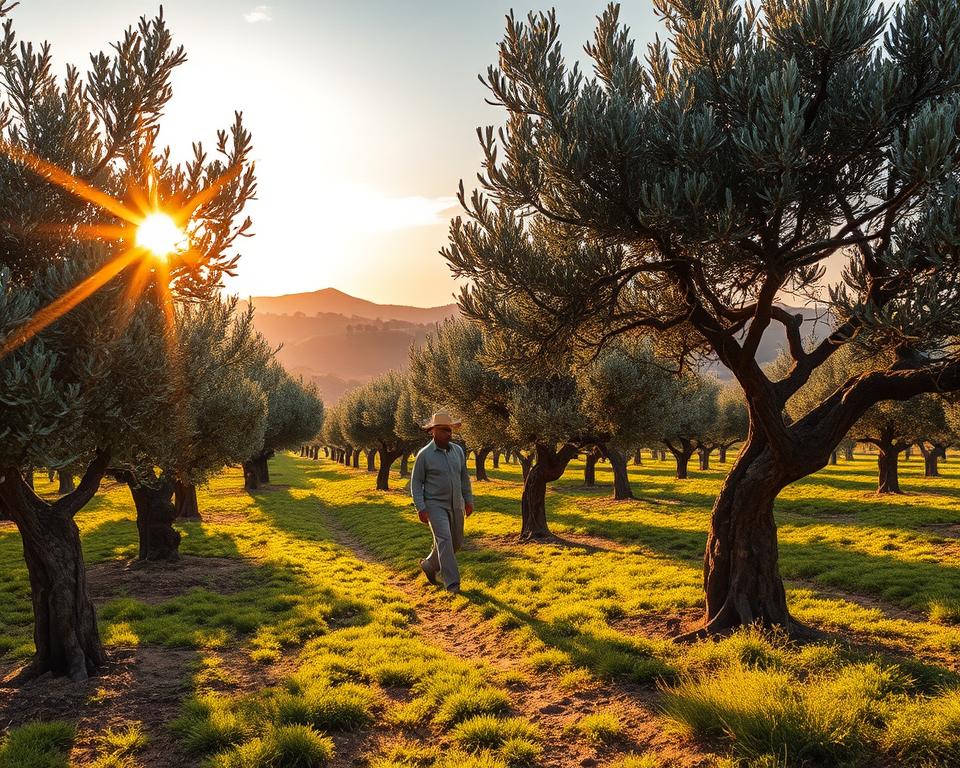
The country’s climate and geography shape its cultivation techniques. For example, Crete’s ancient olive groves use traditional methods. These methods have been passed down for generations.
Traditional Methods
Many Greek olive farmers stick to traditional methods. These include manual harvesting and using simple tools. These methods have been used for generations.
Manual harvesting is common in Greek olive groves. It involves picking olives by hand, often using ladders or rakes. This method ensures high-quality oil by selecting the ripest olives.
Traditional pruning is also used. Pruning keeps olive trees healthy and productive. Experienced farmers prune their trees to promote growth and increase yields.
Innovations in Modern Olive Farming
Modern olive farming in Greece has seen big changes. These changes aim to make farming more efficient and improve olive oil quality.
Mechanized harvesting equipment is a key innovation. These machines quickly harvest olives, saving labor. While they cost a lot at first, they can save money in the long run.
Precision agriculture is another area of innovation. Farmers use drones, satellite imaging, and soil sensors to monitor their groves. This helps them make better decisions about irrigation, fertilization, and pest control.
The mix of old and new techniques makes Greece a top olive oil producer. As demand for quality olive oil grows, Greek farmers are ready. They can meet this demand while keeping their cultural heritage alive.
Sustainable Practices in Olive Farming
Greek olive farmers are now focusing on sustainable practices. This is to protect the biodiversity of their olive groves. It’s good for the environment and the quality of the olives.
The Need for Organic Growth
More people want products that are good for the planet. Organic olive farming is a big step in this direction. It means no synthetic fertilizers, pesticides, or GMOs, which is better for the ecosystem.
- Enhances soil fertility and structure
- Promotes biodiversity
- Reduces the environmental impact of farming
Organic farming in Greece is making the environment better and the olives taste better. Organic olives have a richer flavor and more nutrients than non-organic ones.
Water Conservation Strategies
Water is key in olive farming, and Greece is working hard to save it. Farmers are using smart ways to use less water, like:
- Drip irrigation systems that deliver water directly to the roots of the trees, reducing evaporation and runoff.
- Soil moisture monitoring to ensure that water is applied only when necessary.
- Cover cropping to enhance soil’s water retention capacity.
These methods not only save water but also help the farm last longer. It’s clear that these practices are essential for Greek olive farming’s future.
The Art of Tasting Olive Cultivars
Tasting olive oil is more than just eating. It’s an adventure. The flavors and smells of top-notch olive oil take you to the Mediterranean. There, growing olives is a tradition that’s been around for ages.
How to Evaluate the Quality of Olive Oil
Checking olive oil quality needs both taste skills and knowledge. First, check the color. Good olive oil is bright green, showing it’s full of chlorophyll. Then, smell it. Fresh, fruity smells mean it’s top-notch.
When you taste it, think about the flavors. Does it taste fruity, floral, or peppery? A great olive oil tastes balanced and smooth. The aftertaste, or how long it stays in your mouth, also matters. A longer aftertaste means it’s more complex and better quality.
Key factors to evaluate:
- Color
- Aroma
- Flavor profile
- Aftertaste
Tips for Hosting an Olive Oil Tasting
Hosting an olive oil tasting can be both fun and educational. Pick a variety of olive oils from different Greek types. Make sure to have something like bread or crackers and water to clean your palate between tastes.
When serving the oils, use dark glasses to hide their color. This helps tasters focus on the taste and smell. Give everyone a scorecard to write down their thoughts on each oil’s color, smell, taste, and overall feel.
Tips for a successful tasting:
- Choose a diverse selection of olive oils
- Use neutral palate cleansers
- Provide scorecards for feedback
Conclusion: Embracing the Diversity of Greek Olives
Reflecting on our journey through Greek Olive Cultivars, I’m amazed by their rich diversity. These ancient trees grow in the sun-kissed hills of the Peloponnese and modern farms of Crete. Greek olives are a true treasure, cherished for centuries.
Discovering the Flavors
Exploring Greek Olive Cultivars has been a sensory adventure. Each variety brings its own unique flavor and aroma. From Koroneiki’s fruity taste to Kalamata’s rich flavor, every olive has a story.
Sharing the Passion
I hope this article has inspired you to explore Greek Olive Cultivars. Whether you love food, health, or just appreciate the finer things, Greek olives have something for you. Join me in discovering and appreciating the rich diversity of Greek olives.
