

Did you know that using different types of olive oil can make your dishes taste better? With so many options, picking the right one can be tough. As someone who loves cooking, I’ve tried many olive oils to find their special qualities.
In this detailed guide, I’ll help you explore the world of olive oils. You’ll learn how to make your cooking even better. Whether you’re an expert chef or just starting, knowing about the different olive oils and their uses can open up new flavors in your recipes.
Key Takeaways
- Discover the various types of olive oil and their unique flavor profiles.
- Learn how to choose the right olive oil for different cooking techniques.
- Explore the benefits of using high-quality olive oil in your recipes.
- Understand how to store olive oil to preserve its flavor and nutritional value.
- Get tips on substituting olive oil in your favorite recipes.
Understanding Olive Oil Varieties
Olive oil is a key ingredient in many dishes. It comes in different types, each with its own taste and uses. Knowing these differences helps you cook better and enhance your food’s flavors.
Extra Virgin Olive Oil: The Gold Standard
Extra Virgin Olive Oil (EVOO) is the top quality olive oil. It has a low acidity level and a rich taste. It’s made through cold-pressing, keeping its natural goodness and flavor.
EVOO is great for dishes where olive oil is the main flavor. Use it in salad dressings or as a finishing touch for cooked foods.
Key characteristics of EVOO:
- Low acidity (less than 0.8%)
- Rich, fruity flavor
- Cold-pressed extraction process
Pure Olive Oil vs. Extra Virgin
Pure Olive Oil is a mix of different olive oils and may include refined oils. It has a neutral taste and can handle high heat better than EVOO. But, it doesn’t have the same rich flavors as EVOO.
Choosing between EVOO and Pure Olive Oil depends on your cooking method and flavor preferences.
Taste Profiles of Common Olive Oils
Each olive oil has its own taste, shaped by the type of olive, where it’s from, and how it’s made. For example, Greek olive oils are often strong and peppery. Italian olive oils are fruity and smooth.
| Olive Oil Type | Taste Profile | Best Use |
|---|---|---|
| Arbequina | Fruity, smooth | Salad dressings, low-heat cooking |
| Koroneiki | Robust, peppery | High-heat cooking, marinades |
| Frantoio | Medium fruitiness, slightly bitter | Versatile, suitable for most dishes |
The table shows how knowing the taste and uses of different olive oils helps you pick the right one for your cooking.
The Health Benefits of Olive Oil
Olive oil is famous for its taste and health perks. It’s a key part of the Mediterranean diet. This diet is known for its health benefits, thanks to olive oil.
Heart Health and Antioxidants
Olive oil is great for your heart. It’s full of antioxidants that fight off bad stuff and lower bad cholesterol. Cooking with Extra Virgin Olive Oil is extra good because it’s packed with antioxidants and tastes mild.
“The Mediterranean diet, rich in olive oil, lowers heart disease risk,” a study found. This is because olive oil’s monounsaturated fats are good for the heart.
Olive Oil and Mediterranean Diet
The Mediterranean diet is famous for its health benefits, and olive oil is a big reason why. Using Olive Oil in Recipes makes it easy to follow this diet. It’s all about eating whole grains, fruits, veggies, and healthy fats like olive oil.
- Rich in antioxidants
- Supports heart health
- Promotes a balanced diet
Cooking vs. Drizzling
There’s a debate on cooking with olive oil versus drizzling it over food. Both ways have their benefits. Cooking with olive oil can make your meals more nutritious. But drizzling it keeps its flavor and health benefits.
Tips for Cooking with Olive Oil include picking the right type for your cooking. Use refined olive oil for high heat, and Extra Virgin Olive Oil for low heat or as a finishing touch.
“Olive oil’s health benefits are maximized when it’s consumed as part of a balanced diet, rich in fruits, vegetables, and whole grains.”
Choosing the Right Olive Oil for Your Dish
The right olive oil can really make your cooking better. It can add flavor and texture. With so many types out there, picking the best one can seem hard. But, knowing a few key things can make it easier.
Flavor Pairing with Olive Oil
Olive oil is very versatile when it comes to flavor pairing. A mild olive oil is great for dishes where you don’t want the oil to take over. A strong or fruity olive oil, on the other hand, can really bring out the flavors in richer dishes. For example, a robust olive oil is perfect with grilled meats or strong vegetables.
Celebrated chef Alice Waters once said, “The quality of the olive oil is key in cooking, as it can make or break the dish.” This shows how important it is to pick the right olive oil for your recipe.
High-Heat vs. Low-Heat Cooking Oils
Not all olive oils are good for high-heat cooking. Extra Virgin Olive Oil (EVOO) is tasty but has a lower smoke point than other olive oils. For cooking at high heat, like frying or sautéing, a lighter or refined olive oil is better because it has a higher smoke point.
- Use EVOO for low-heat cooking or as a finishing oil.
- Opt for lighter olive oil for high-heat cooking.
Recommendations for Specific Cuisines
Different cuisines need different olive oils. For example, Italian cooking often uses high-quality EVOO. Greek cuisine might prefer a stronger olive oil to match bold flavors.
| Cuisine | Recommended Olive Oil Type |
|---|---|
| Italian | Extra Virgin Olive Oil |
| Greek | Robust or Fruity Olive Oil |
| Spanish | Arbequina or Picual Olive Oil |
How to Store Olive Oil Properly
Keeping olive oil fresh is key for its taste and health benefits. It’s important for cooking and adding flavor. The storage method greatly affects its quality.
Best Practices for Longevity
To keep your olive oil fresh, follow these tips:
- Store olive oil in a cool, dark place, away from direct sunlight and heat sources.
- Use dark glass bottles or containers that block light to prevent oxidation.
- Keep the bottle tightly sealed to prevent air from entering and causing the oil to become rancid.
- Avoid storing olive oil near the stove or oven, as heat can cause it to degrade.
Signs of Spoiled Olive Oil
Even with proper storage, olive oil can spoil. Here are some signs to look out for:
- A strong, unpleasant smell that’s different from its usual aroma.
- A bitter or sour taste that’s not characteristic of the oil’s normal flavor profile.
- A cloudy appearance or sediment at the bottom of the bottle.
The Importance of Light and Temperature
Light and temperature are key in olive oil degradation. Light can make the oil lose flavor and nutrients. High temperatures speed up oxidation, causing rancidity. Controlling these factors helps extend olive oil’s shelf life.
By following these guidelines and being mindful of how you store your olive oil, you can ensure that it remains fresh and flavorful for a longer period, improving your cooking and dining experiences.
Cooking Techniques and Olive Oil
Olive oil is key in many cooking methods, from sautéing to baking. Its versatility and rich flavor make it perfect for various dishes. We’ll look at how to use olive oil in different cooking ways.
Sautéing and Stir-Frying
Sautéing and stir-frying need an oil with a good smoke point. Extra Virgin Olive Oil (EVOO) is sometimes questioned for high-heat cooking. But, it works well at moderate temperatures. For a stronger taste, try a mild or light EVOO.
When stir-frying, heat the oil fast and cook quickly. This keeps the ingredients’ texture and flavor. Adding garlic and ginger to olive oil can make your dish taste better.
Baking with Olive Oil
Olive oil adds moisture and flavor to baked goods. It’s a favorite in Mediterranean baking, used in cakes, bread, and pastries. Remember, olive oil has a strong taste, so use it where it fits well with other flavors.
Olive oil is essential in traditional Italian Schiaffoni cake. It adds richness and a fruity taste. Trying different olive oils can create unique flavors in your baked items.
Marinades and Dressings
Olive oil is a main part of many marinades and salad dressings. Its rich flavor balances the acidity in vinegar or lemon juice. This creates a balanced taste. When making marinades, mix olive oil with herbs, spices, and acidic ingredients for a great flavor.
For dressings, use a good EVOO as the base. Whisk it with Dijon mustard, lemon juice, and a bit of salt for a tasty vinaigrette. Try different oil to acid ratios to find your favorite taste.
Exploring Regional Olive Oils
Regional olive oils take you on a culinary journey through Italy, Spain, and Greece. Each place has its own special olive oils. These are shaped by the local climate, soil, and tradition.
Italian Varieties: Tuscan to Sicilian
Italy is famous for its top-notch olive oils. Tuscany and Sicily are known for their unique types. Tuscan olive oil has a strong taste, perfect for dishes like ribollita.
Sicilian olive oil is fruity and slightly sweet. It’s great for adding flavor to your meals.
For more info on olive oil origins and varieties, check out Exploring the World of Olive Oils.
Spanish Olive Oils: From Arbequina to Picual
Spain is also a big player in olive oil production. Places like Catalonia and Andalusia add to its rich heritage. Arbequina olive oil is mild and buttery, perfect for cooking.
Picual olive oil is loved for its fruity taste and high antioxidants. It’s great for adding flavor and health benefits to your dishes.
| Region | Olive Oil Variety | Flavor Profile |
|---|---|---|
| Tuscany, Italy | Frantoio | Robust, peppery |
| Sicily, Italy | Nocellara | Fruity, slightly sweet |
| Catalonia, Spain | Arbequina | Mild, buttery |
| Andalusia, Spain | Picual | Fruity, high antioxidant content |
Greek Olive Oils and Their Unique Flavors
Greece is known for its olive oil, with Koroneiki and Kalamata being favorites. Greek olive oil has a fruity and slightly bitter taste. It’s perfect for salad dressings and marinades.
Key Characteristics of Regional Olive Oils:
- Italian Olive Oils: Robust flavors, often used in traditional Italian cooking.
- Spanish Olive Oils: Varied flavor profiles, ranging from mild to fruity.
- Greek Olive Oils: Fruity and slightly bitter, ideal for dressings and marinades.
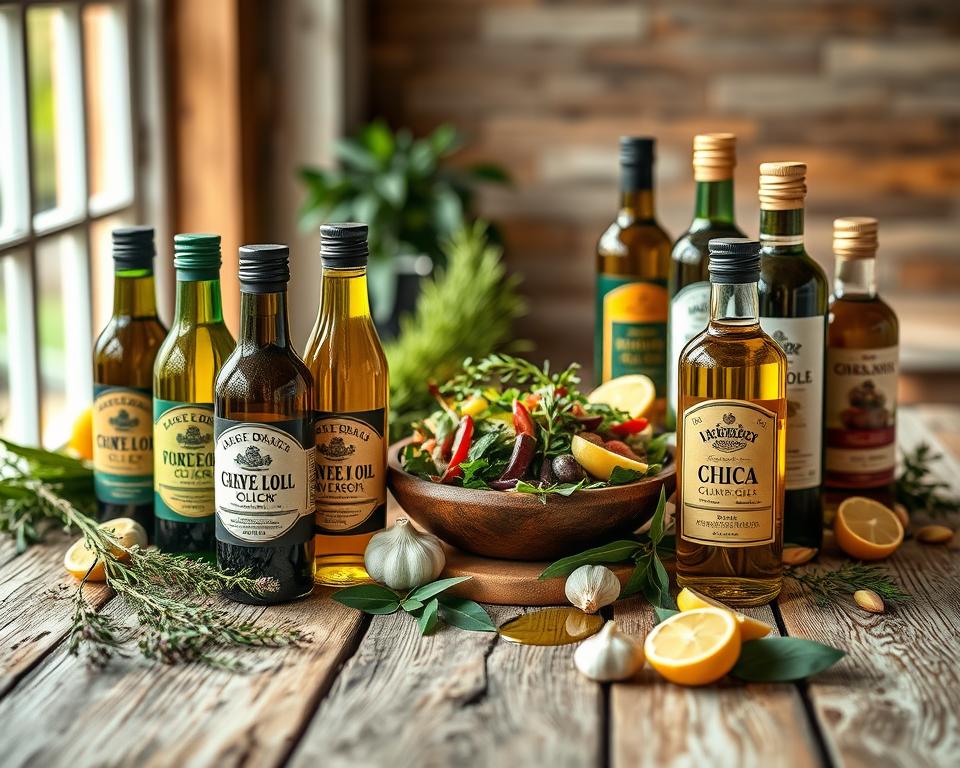
Infused Olive Oils: Enhancing Flavor
Discover the rich flavors of infused olive oils and take your cooking to the next level. Infused olive oils offer a world of flavor possibilities. You can experiment with various ingredients to create unique and delicious dishes.
Popular Infusions to Try
There are numerous infused olive oils available, each with its own distinct flavor profile. Some popular options include:
- Garlic and Herb Infused Olive Oil: Perfect for Mediterranean dishes, this infusion combines the richness of garlic with the freshness of herbs like rosemary and thyme.
- Chili Infused Olive Oil: Adds a spicy kick to your dishes, ideal for those who enjoy a bit of heat in their cooking.
- Lemon and Basil Infused Olive Oil: Brightens up salads and pasta dishes with its citrusy and herbaceous notes.
DIY Olive Oil Infusions
Creating your own infused olive oils at home is a simple process. It allows you to customize flavors to your liking. Here’s a basic guide:
- Choose your base olive oil, preferably a high-quality extra virgin olive oil.
- Select your infusion ingredients, such as herbs, spices, or citrus zest.
- Combine the olive oil and ingredients in a clean glass jar.
- Store the jar in a cool, dark place for a few weeks to allow the flavors to meld.
- Strain the oil through a cheesecloth or a fine-mesh sieve into another clean glass bottle.
Storage Tips for Infused Oils
To preserve the flavor and aroma of your infused olive oils, proper storage is key. Here are some tips:
- Store infused oils in dark glass bottles to protect them from light.
- Keep them in a cool, dark place, such as a pantry or cupboard.
- Avoid storing infused oils near heat sources or in direct sunlight.
- Use them within a few months for the best flavor.
By incorporating infused olive oils into your cooking, you can add a new layer of complexity and flavor to your dishes. Whether you choose to buy them or make your own, infused olive oils are sure to elevate your culinary creations.
The Role of Olive Oil in Vegan Cooking
Olive oil is key in vegan cooking, adding depth and richness to dishes. It’s a must-have in any vegan’s pantry. It’s not just a fat substitute but a versatile ingredient that boosts flavor and nutrition in plant-based recipes.
Substituting Fats in Vegan Recipes
Olive oil is great for replacing other fats in vegan cooking. It works well in baked goods, sautéing veggies, or making dressings. The choice of olive oil depends on the flavor you want. Mild olive oil is good for baking, while robust olive oil adds a rich taste to sautéed dishes.
| Vegan Recipe | Olive Oil Variety | Benefits |
|---|---|---|
| Baked Goods | Mild Olive Oil | Adds moisture without overpowering flavor |
| Sautéed Vegetables | Robust Olive Oil | Enhances flavor with a rich, fruity taste |
| Salad Dressings | Extra Virgin Olive Oil | Provides a high-quality, flavorful base |
Olive Oil in Plant-Based Dressings
Olive oil is essential in many plant-based dressings. It’s a base that can be flavored with herbs, spices, and vinegars. For a tasty vinaigrette, mix olive oil with lemon juice or vinegar and seasonings. High-quality extra virgin olive oil makes the best dressings.
Flavor Boosts for Vegan Dishes
Olive oil can also add flavor to vegan dishes. Try drizzling it over roasted veggies, using it as a finishing oil for soups, or in marinades for tofu or tempeh. The right olive oil can make your dishes more flavorful and enjoyable.
Using olive oil in vegan cooking not only improves flavor but also adds nutritional value. It’s full of healthy fats and antioxidants, making it a great addition to a vegan diet.
Olive Oil Myths Debunked
In my cooking adventures, I’ve found many olive oil myths. These have made me curious and eager to learn more. As someone who loves to cook, knowing the truth about olive oil is key.
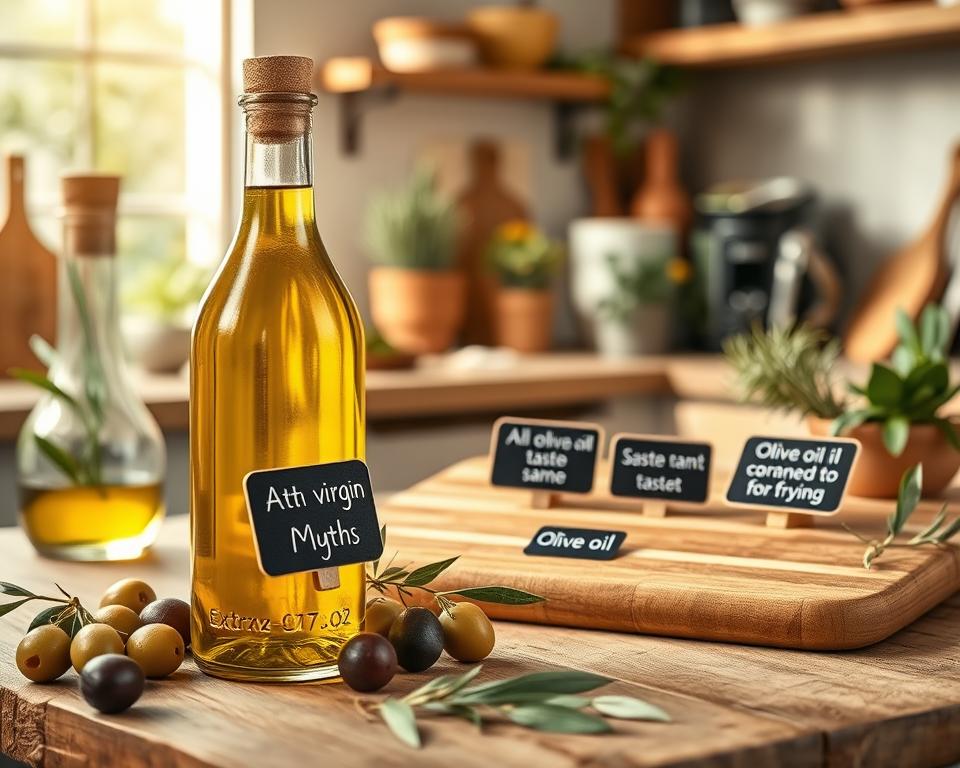
Clarifying Common Misconceptions
Many think olive oil can’t handle high heat. But, it’s okay for cooking at moderate temperatures. Using olive oil in recipes can add flavor and health benefits, making it a great choice.
Another myth is that all olive oils are the same. But, different types have unique tastes and textures. For example, a strong extra virgin olive oil is great for dressing salads. A lighter one is better for baking.
The Smoke Point Debate
The debate about olive oil’s smoke point is ongoing. Some say it’s not good for high heat, while others disagree. The truth is, it depends on the type and how you use it. Tips for cooking with olive oil include picking the right type and watching the temperature.
For high heat, use a neutral-tasting oil with a higher smoke point. But, for low heat or as a finishing touch, olive oil is perfect. It adds depth and richness to your dishes.
Health Claims: What’s True?
Olive oil is known for its health benefits, like reducing inflammation and supporting heart health. While some claims are overhyped, there’s solid evidence backing its health benefits. As part of a balanced diet, olive oil can be a healthy addition, providing antioxidants and healthy fats.
To get the most benefits, choose high-quality olive oil and use it in moderation. Knowing the facts and myths about olive oil helps you make better choices in your cooking.
Tasting Olive Oil Like a Pro
As a food lover, I’ve learned that tasting olive oil is more than just drinking it. It’s about enjoying its rich flavors and scents. To really get the most out of olive oil, you need to know the different types and how to use them in cooking.
Conducting an Olive Oil Tasting
To taste olive oil like a pro, start by picking a few different kinds. Choose some Extra Virgin Olive Oil for its unique tastes. Pour a small amount into a tasting cup and look at its color and clarity. The color can tell you about the age and type of olives used.
Next, swirl the oil in the cup to bring out its smells. Take a deep sniff to enjoy the fragrance. Then, take a small sip, letting the oil coat your tongue. Notice the flavors, like fruity, peppery, or bitter notes.
Sensory Evaluation Techniques
When tasting olive oil, paying attention to its texture and finish is key. A good olive oil should feel smooth and have a nice aftertaste. When trying different Olive Oil Varieties for Cooking, think about how their unique tastes can improve your dishes.
- Observe the oil’s appearance.
- Appreciate its aroma.
- Taste and note the flavors.
Identifying Flavors and Aromas
Getting to know the complex flavors and scents in olive oil takes practice. You might taste fruity notes, peppery sensations, or bitter undertones. When Cooking with Extra Virgin Olive Oil, these flavors can turn simple dishes into something special.
By learning how to taste olive oil, you can enjoy the differences between various oils. This knowledge helps you choose the best olive oil for your recipes. Whether you’re making a salad or cooking veggies, the right olive oil can make a big difference.
Recipes Featuring Different Olive Oils
Using different olive oils can change how your food tastes. Whether it’s a simple salad or a complex pasta dish, the right oil can make it better.
Fresh Salads and Dressings
Olive oil is key in salad dressings. It adds a rich, fruity taste that goes well with many greens and veggies. For a light summer salad, mix extra virgin olive oil with lemon juice, garlic, and a bit of salt. This dressing is great on mixed greens, cherry tomatoes, and avocado slices.
Here’s a simple recipe for a classic vinaigrette:
| Ingredient | Quantity |
|---|---|
| Extra Virgin Olive Oil | 2/3 cup |
| Red Wine Vinegar | 1/3 cup |
| Dijon Mustard | 1 tsp |
| Salt | To taste |
| Pepper | To taste |
Olive Oil-Based Pasta Dishes
Pasta dishes are where olive oil really stands out. A good olive oil can make your pasta taste better, whether it’s a simple spaghetti aglio e olio or a complex pesto. For a quick, tasty meal, toss cooked spaghetti with garlic-infused olive oil, red pepper flakes, and Parmesan cheese.
Flavorful Roasted Vegetables
Roasting veggies with olive oil makes them sweeter and more flavorful. For roasted veggies, a mild or light olive oil works best. It won’t mask the veggies’ natural tastes. Toss your favorite veggies (like Brussels sprouts, carrots, or sweet potatoes) with olive oil, salt, and herbs, then roast until tender and caramelized.
Herbs like rosemary, thyme, and oregano are great with olive oil for roasted veggies. Trying different herbs can help you find new favorite flavors.
Conclusion: Embrace the Diversity of Olive Oil
Exploring olive oils shows us each type has its own taste. I suggest trying different olive oils to find the ones you like best. This way, you can cook with the best olive oils for your taste.
Exploring New Flavors
Using various olive oils in your cooking can make your dishes better. It lets you enjoy the rich tastes olive oil offers. Whether you’re cooking, baking, or making dressings, the right olive oil can change everything.
Tips for the Perfect Dish
When using different olive oils, pick the right one for your cooking. For cooking at high heat, choose oils with a high smoke point. For dressings and marinades, think about the flavor you want. With these tips, you’ll make tasty dishes that show off olive oil’s versatility.
