


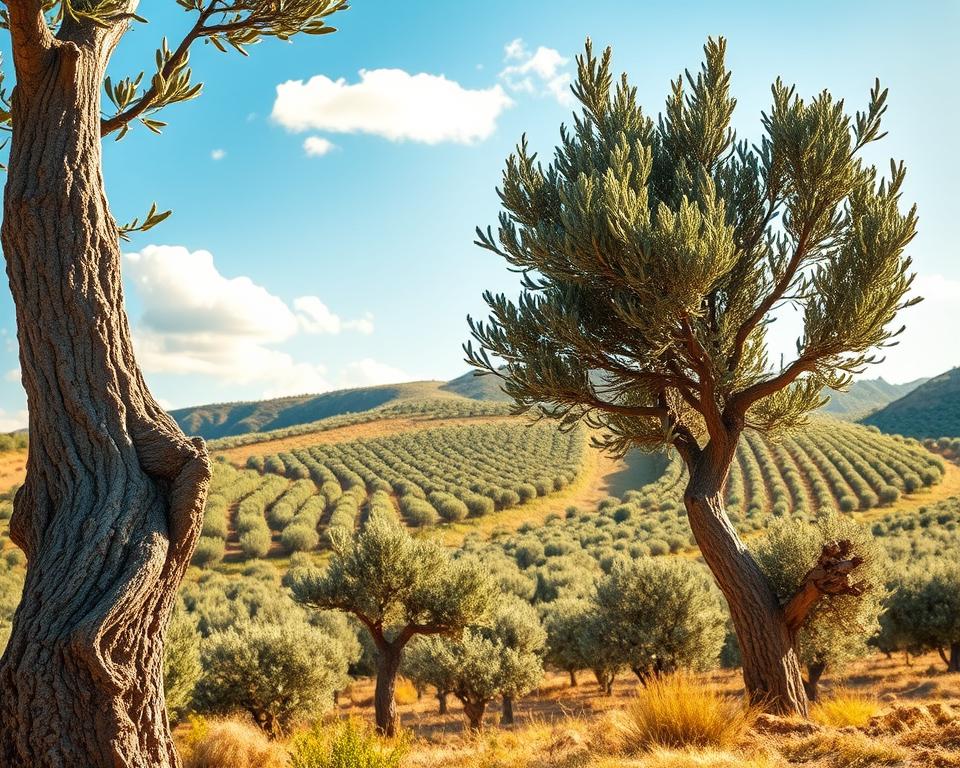
Olive cultivation is big in many places, like the Mediterranean. Did you know olive trees can live for over 3,000 years? But, their life and growth depend a lot on the climate.
If you love growing olives, you’ll want to know what climate they need. The right climate conditions are key for healthy, fruitful olive trees. I’ll show you the important factors like temperature, rainfall, and soil.
Key Takeaways
- Understanding the ideal climate conditions is key for growing olives.
- Olive trees need a certain temperature to grow well.
- They also need enough rain and well-drained soil to thrive.
- Each olive tree variety has its own climate needs.
- The right climate can really boost olive tree production.
Overview of Olive Trees and Their Climate Preferences
Olive trees have been key in Mediterranean farming for thousands of years. They love warm summers and mild winters. These evergreen trees give us olives and make landscapes beautiful. Knowing the ideal climate for olive trees is key for growers.
Olive trees need mild temperatures, enough rain, and good soil. The olive growing guide says these are musts for growth. In their home, the Mediterranean, they handle dry summers but need winter rain to do well.
Olive trees can grow in many places, but they’re best in their native climate. Temperature, rain, and soil quality are key to their success. Growers can help olive trees thrive by understanding these needs.
To sum up, olive trees prefer mild winters, warm summers, and enough moisture. By matching these conditions, growers can help their olive trees grow well.
Optimal Temperature Ranges for Olive Cultivation
Knowing the best temperature range is key for growing olives. Olive trees don’t like big changes in temperature. The weather greatly affects how well they grow.

Ideal Growth Temperatures
Olive trees do best when it’s between 64°F and 75°F (18°C and 24°C). This temperature helps them grow strong and produce lots of fruit. Being in this range helps them make food through photosynthesis.
While they can handle a bit more, going outside this range can stress them out. This stress can make it harder for them to grow fruit. A wise grower once said,
“The right temperature is like the heartbeat of your olive grove; it’s essential for their vitality.”
Effects of Frost on Olive Trees
Frost is very bad for olive trees. When it gets below 32°F (0°C), it can really hurt them. Young trees are the most at risk.
| Temperature Range | Effect on Olive Trees |
|---|---|
| Above 75°F (24°C) | Potential for heat stress; may require additional watering. |
| 64°F – 75°F (18°C – 24°C) | Ideal for growth and productivity. |
| 32°F – 64°F (0°C – 18°C) | Dormancy or reduced growth; risk of frost damage. |
| Below 32°F (0°C) | Significant risk of frost damage; potentially fatal. |
To keep your olive trees safe from frost, you can cover them or use heaters. Knowing how to handle temperature issues helps keep your trees healthy and productive.
Rainfall Requirements for Olive Trees
To grow healthy olive trees, knowing their rainfall needs is key. Olive trees can handle drought well but need enough rain for growth and fruit.
The right amount of rain changes based on the olive type, soil, and local weather.
Importance of Adequate Rainfall
Adequate rain is vital for olive tree health. It helps with:
- Promoting healthy growth and development
- Supporting fruit production and quality
- Maintaining soil moisture, which helps in nutrient uptake
Olive trees usually need 20-25 inches (500-600 mm) of rain yearly. But, some varieties can handle less rain and grow well.
Drought Tolerance in Olive Varieties
Different olive varieties can handle drought differently. Knowing your tree’s specific needs is important for water management.
Factors that affect drought tolerance include:
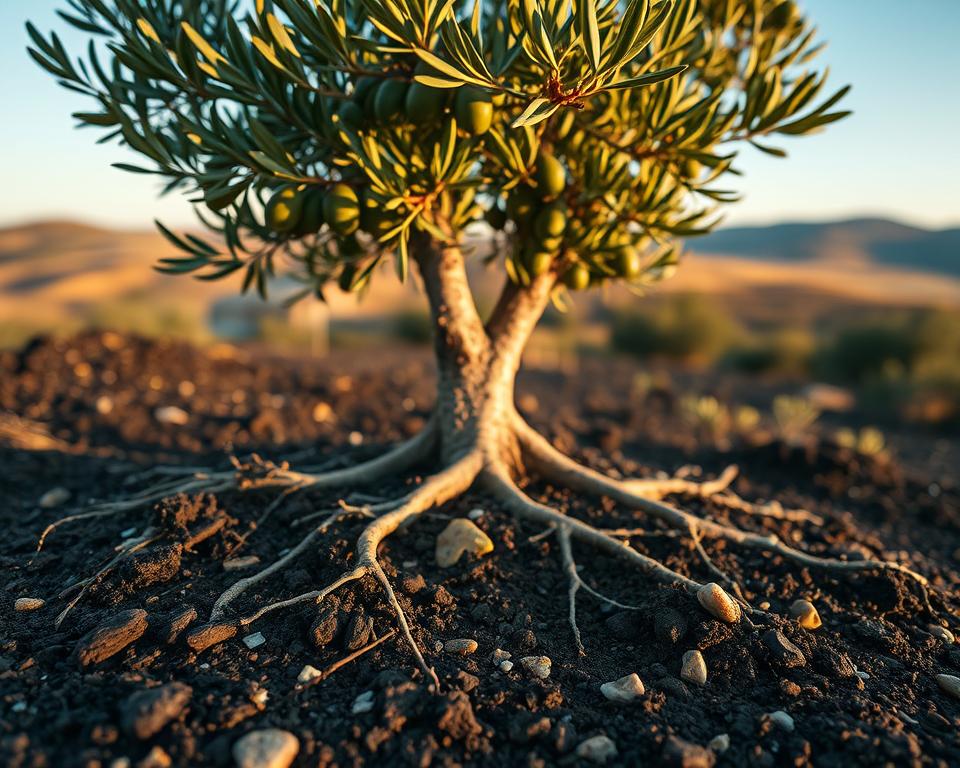
- The tree’s root depth and its ability to access water deeper in the soil
- The tree’s water storage capacity in its trunk, branches, and roots
- The variety’s genetic predisposition to withstand dry conditions
By understanding these factors and your tree’s rainfall needs, you can manage their water better. This ensures they thrive in their environment.
Soil Conditions for Thriving Olive Trees
Olive trees need the right soil to grow well. The soil’s health greatly affects the trees’ growth and fruit production.
pH Levels and Soil Type
The soil’s pH level is very important for olive trees. They do best in slightly alkaline to neutral soil, with a pH of 6.5 to 8.5. Sandy loam and clay loam soils are best because they drain well and let air in.
Experts say, “The best soil for olive trees is well-drained and holds water well.”
“Olive trees do well in many soils, but they love soils that drain well and don’t hold too much water.”
Drainage and Water Retention
Drainage is key to stop root rot from too much water. Olive trees can handle some drought but need steady moisture for growth. The soil must hold water but not too much.
| Soil Type | Drainage Characteristics | Water Retention |
|---|---|---|
| Sandy Loam | Good drainage, low water retention | Moderate |
| Clay Loam | Moderate drainage, high water retention | High |
| Silt Loam | Moderate drainage, moderate water retention | Moderate |
Choosing the right soil is key for growing olive trees. Knowing about pH, soil type, drainage, and water retention helps create the best environment for your trees.
Growing Zones for Olive Trees in the U.S.
To grow olive trees in the U.S., you need to know the hardiness zones and regional climates. Olive trees do well in USDA zones 9-11. These areas have mild weather and little frost.
USDA Hardiness Zones
The USDA Hardiness Zones are key to growing olive trees. Zones 9-11 are best because they have warm weather and little frost. This is what olive trees need to grow well.
Horticulture experts say olive trees hate frost. Frost can hurt or kill them. So, zones 9-11 are perfect for growing olive trees.
Regions Suitable for Olive Cultivation
Places with a Mediterranean climate are great for olive trees. California, for example, is famous for its olive oil. Its climate and farming skills make it ideal.
- California
- Arizona
- Texas (certain regions)
These areas have dry summers and mild winters. Olive trees love this kind of weather. It makes them grow well.
“The Mediterranean climate, characterized by warm, dry summers and mild, wet winters, is perfect for olive trees.” –
In summary, knowing the growing zones and climates is key to growing olive trees in the U.S.
Sunlight Requirements for Olive Trees
To grow healthy olive trees, knowing their sunlight needs is key. These trees do best in lots of sunlight. This is important for their growth and how much they produce.
Full Sunlight Needs
Olive trees need full sunlight to grow well. They should get direct sunlight for at least 6 hours a day. Adequate sunlight exposure helps them grow strong and produce more.
In places with little sunlight, growing olive trees can be tough. This is because they don’t get enough sunlight to photosynthesize well.
Impact of Shade on Growth
Shade can hurt olive tree growth and how much they produce. Trees in shaded spots may grow slower and make less fruit. It’s important to pick a spot with little shade for the best growth.
| Sunlight Hours | Impact on Olive Trees |
|---|---|
| 6+ hours | Optimal growth and yield |
| 4-6 hours | Moderate growth, possible yield drop |
| <4 hours | Poor growth, big yield drop |
Knowing how much sunlight olive trees need is vital for growing them well. By making sure they get enough sunlight, growers can help them grow strong and produce more.
Common Pests and Diseases in Olive Trees
Olive trees face many pests and diseases. These can harm their health and how much they produce. Knowing about these issues is key to keeping olive trees healthy.
Identifying Common Issues
Many pests and diseases can harm olive trees. Pests like the olive fly, scale, and aphids are common. The olive fly, for example, lays eggs in the fruit, causing damage.
Diseases like root rot and leaf spot also harm olive trees. Root rot comes from too much water and can weaken the tree. Leaf spot makes it hard for the tree to make food through photosynthesis.
Managing Pest Infestations
Managing pests and diseases in olive trees requires a few steps. These include good care, using natural controls, and sometimes chemicals. It’s important to watch for problems early.
| Pest/Disease | Symptoms | Management |
|---|---|---|
| Olive Fly | Damaged fruit, presence of eggs or larvae | Use of traps, biological control, and targeted pesticide application |
| Scale | Presence of scale insects on branches and leaves | Pruning infested areas, application of horticultural oil |
| Root Rot | Wilting, yellowing leaves, root decay | Improvement of drainage, reduction in watering, fungicide application |
By knowing about pests and diseases and using the right management, growers can keep their trees healthy. This ensures a good olive crop.
Seasonal Care for Olive Trees
To keep my olive trees healthy, I follow a seasonal care plan. This plan meets their specific needs all year round. It’s important to know what they need in each season.
Spring Growth Maintenance
In spring, olive trees grow fast, making maintenance key. Pruning is a must to remove dead branches. This helps the tree grow well and keeps air moving.
I also fertilize my trees in spring. I use a balanced fertilizer to give them the nutrients they need.
Spring is also the time to watch out for pests. As it gets warmer, pests that harm olive trees become more common. Keeping an eye out and taking action can stop infestations.
Winter Preparations
When winter comes, I prepare my olive trees for the cold. I make sure they’re well-watered before the ground freezes. This helps them get through the dry winter.
It’s also important to protect them from frost. Olive trees don’t like extreme cold. Using covers or other protection can prevent frost damage.
Here’s a quick look at the main seasonal care tasks for olive trees:
| Season | Key Tasks |
|---|---|
| Spring | Pruning, fertilization, pest management |
| Winter | Watering before ground freeze, frost protection |
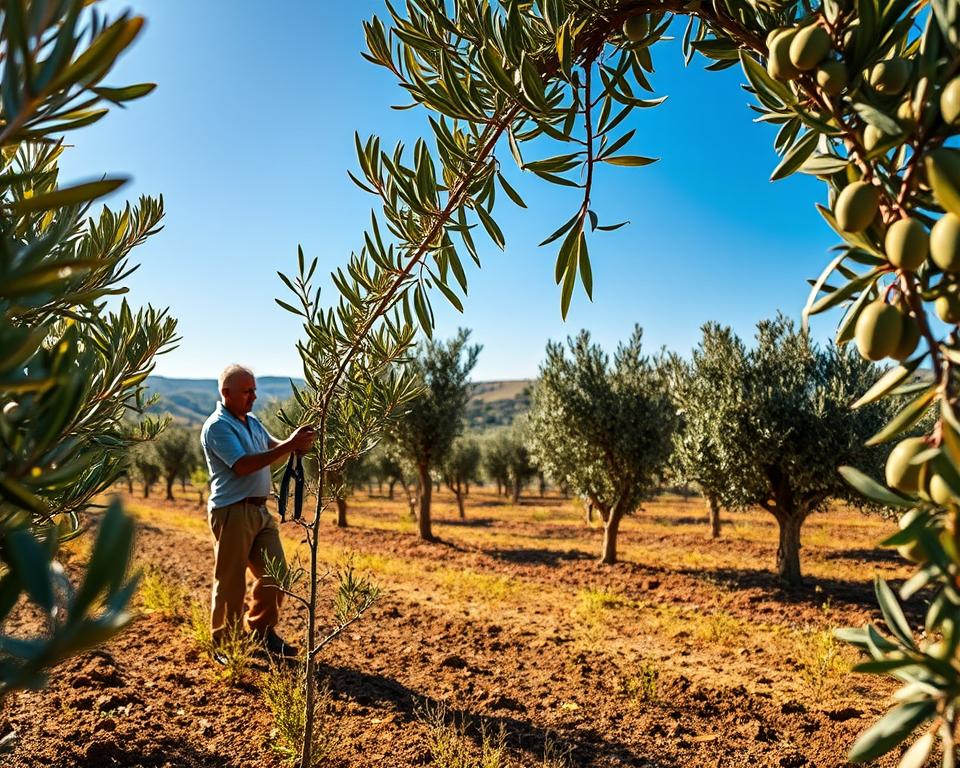
By sticking to these seasonal care tips, my olive trees stay healthy and productive. It’s all about understanding and meeting their needs all year.
Strategies for Successful Olive Harvesting
Olive harvesting is an art that requires precise timing and techniques. It’s important for growers to know the best strategies. This can greatly improve the quality and quantity of their yield.
Timing for Optimal Yield
The timing of the olive harvest is key. It depends on the olive variety, climate, and how the olives will be used. Olives are usually picked when they’re ripe, as they don’t ripen after being picked.
For table olives, they’re harvested when fully colored and the right size. For oil, the best time is when they’ve turned from green to purple or black. This shows they have the highest oil content.
Post-Harvest Handling Techniques
After picking, it’s vital to handle the olives right to keep their quality. First, sort and clean them to remove leaves, twigs, or damaged olives. This step prevents contamination and ensures only the best olives are used.
For oil, it’s important to process the olives fast to avoid spoilage. Cold-pressing is a common method. It helps keep the oil’s flavor and nutritional value.
By learning the right timing and techniques for harvesting and handling, growers can improve their olive crop’s quality and yield. This boosts the economic value of olive cultivation and helps make high-quality olive products.
Conclusion: Embracing Olive Cultivation
Cultivating olive trees can be very rewarding. They offer delicious fruit and beautiful landscapes. To make your trees thrive, it’s important to understand their climate needs.
Olive trees can handle a variety of temperatures. But, they are sensitive to extreme weather. Knowing this helps you create the best environment for them.
Advantages of Growing Olives
Growing olives has many benefits. You can make high-quality olive oil and practice sustainable farming. These trees are easy to care for but need the right weather to grow well.
Understanding the weather needs of olive trees is key. It helps you get the best harvest and keep your trees healthy for a long time.
Starting Your Olive Cultivation Journey
If you’re thinking about growing olives, it’s worth exploring. For more info on how climate affects olive harvests, check out this article. It offers insights into the challenges and opportunities of olive cultivation in various climates.