


Did you know a single mature olive tree can produce up to 20 kilograms of olives each year? The demand for olive oil is growing worldwide. This makes growing a olive orchard a promising business. As an olive grower, you want to get the most from your harvest and keep your trees healthy.
To get a big harvest, knowing how to grow olive trees is key. This includes picking the best variety and using smart farming methods. In this article, I’ll share tips on growing olives commercially. These tips will help you make sure your harvest is successful.
Key Takeaways
- Selecting the right olive tree variety for your climate and soil type
- Implementing effective irrigation and fertilization techniques
- Pruning and training your olive trees for optimal growth
- Managing pests and diseases to minimize damage
- Harvesting and processing your olives for maximum quality
Understanding the Basics of Olive Cultivation
Before you start growing olives commercially, it’s key to know the basics. Olive cultivation has been perfected over thousands of years. It goes back to ancient times.
History of Olive Growing
Olive growing has a long and varied history in the Mediterranean. It began around 3000 BC. Ancient Greek and Roman ruins show evidence of olive oil making.
This history shows how important olive cultivation is. It has shaped culture, economy, and food in many places. Today, many countries work to improve their olive farming to meet the demand for quality olive oil.
Types of Olive Varieties
There are many olive varieties, each with its own traits and challenges. Some well-known ones are:
- Arbequina: Known for early maturation and high yield, Arbequina is a top choice for olive oil.
- Koroneiki: This Greek variety is famous for its high-quality oil and is often blended.
- Picual: From Spain, Picual is prized for its high oleic acid and disease resistance.
Picking the right olive variety is key for a successful farm. Consider the climate, soil, and use (oil, table olives, or both).
Olive Trees’ Growth Requirements
Olive trees need specific conditions to grow well and produce a lot. Important factors include:
- Climate: They do best in Mediterranean climates with warm, dry summers and mild, wet winters.
- Soil: They need well-drained soil to avoid waterlogging.
- Sunlight: They need full sun to produce well, so choose a sunny spot.
By meeting these needs, you can improve your olive trees’ health and yield. This will help your farming and the quality of your olive cultivation.
Choosing the Right Location for Your Olive Grove
Finding the perfect spot for your olive grove is key to a bountiful harvest. Soil quality, climate, and water drainage play big roles. Let’s explore what to look for in the ideal location.
Soil Quality and Preparation
The soil is the base of your olive grove. It affects your trees’ health and how much they produce. Olive trees do best in well-draining, fertile soil with a pH of 6.5 to 8.5. You might need to test and adjust your soil.
Adding compost can make the soil better for your trees. It helps with structure and fertility.

Before planting, clear out debris and weeds. They can steal water and nutrients from your trees. Getting the soil right is a big step in managing your grove.
Climate Considerations
Olive trees love the Mediterranean climate. They need warm summers and mild winters. They also need a certain number of chill hours to grow fruit, but too much cold can harm them.
Think about the local climate when picking a spot. Consider the average temperature, frost risk, and extreme weather. Olive trees can handle some drought, but they grow better with consistent moisture, even when young.
Water Drainage and Irrigation Needs
Good water drainage is essential to keep your trees healthy. Make sure your grove drains well by checking the land’s slope and soil. If needed, add drainage to avoid waterlogged soil.
Irrigation depends on your climate and soil. Drip irrigation is a smart choice for olive groves. It saves water by delivering it right to the roots. Knowing your irrigation needs and setting up a good system is important for managing your grove.
Preparing Your Land for Planting Olive Trees
Getting your land ready is key to a successful olive orchard. “A good start is half the work done.” Before planting olive trees, make sure your land is ready for their growth.
Land Survey and Layout Planning
Start by doing a land survey. This checks your land’s topography and finds the best spot for your trees. A good layout ensures your trees get enough sunlight and air.
As
“The way you plant your olive trees determines the ease of maintenance and the quality of the harvest.”
It’s important to space your trees right. They should be 15 to 20 feet apart, based on the type and farming style.
Soil Testing and Amendments
Then, test your soil to know its pH and nutrient levels. Olive trees like soil that’s well-drained and has a pH of 6.5 to 8.5. If your soil is off, you might need to add something to fix it.
If your soil is too acidic, add lime. If it’s too alkaline, use compost. Soil amendments make the soil better for your trees, helping with water and nutrients.
Planting Strategies and Techniques
Planting olive trees needs a good plan and technique. Plant them in cooler months to avoid heat stress. Make holes that are twice as wide and deep as the tree’s root ball.
- Be gentle with the roots to avoid damage.
- Water well after planting and keep the soil moist for a year.
- Use mulch to keep moisture in and weeds out.
By following these steps, you’ll start a thriving olive orchard. Remember, the success of your orchard depends on the care you give your trees from the start.
Best Practices for Olive Tree Care
To keep your olive grove thriving, follow best practices like regular pruning and pest control. These steps are key to a healthy, productive orchard. They blend old wisdom with new methods.
Pruning Techniques for Healthy Growth
Pruning is vital for olive trees. It boosts growth, increases yields, and improves olive quality. It’s about cutting off dead branches, shaping the tree, and encouraging fruiting.
Key Pruning Techniques:
- Remove dead, diseased, or damaged branches to stop disease spread and promote growth.
- Thin the tree’s center for better air and sunlight.
- Shape the tree for balance and more fruiting.
Pest and Disease Management
Olive trees face pests like the olive fruit fly and diseases like root rot. Managing them means regular checks, using organic or IPM methods, and keeping the orchard clean.
For more on olive tree care, check out American Olive Farmer.
| Pest/Disease | Symptoms | Management Strategies |
|---|---|---|
| Olive Fruit Fly | Damaged or rotting fruit | Use of traps, biological control, and cultural practices |
| Root Rot | Yellowing leaves, wilting | Improve drainage, avoid overwatering, use resistant rootstocks |
Fertilization Guidelines
Fertilizing olive trees is key for growth and fruit. The right fertilizer depends on soil type, tree age, and nutrient needs.
Soil testing is vital to know your soil’s nutrient and pH levels. Use the test results to tailor your fertilization plan for your trees.
Harvesting Techniques for Optimal Yield
The success of an olive harvest depends on timing, technique, and how you handle the olives after picking. As an olive grower, knowing these factors is key to getting the best quality and quantity from your harvest.
Timing Your Harvest
When it comes to harvesting olives, timing is everything. The best time to pick depends on the olive type, its use (oil or table olives), and the flavor you want. For oil production, olives are picked when ripe for the highest oil content. Check the olives’ color and firmness to find the perfect time. For more on olive harvesting, check out this blog post.
Hand vs. Mechanical Harvesting
Choosing how to harvest is a big decision for olive growers. There are two main ways: hand harvesting and mechanical harvesting. Hand harvesting is more work but lets you pick olives carefully, great for quality olives. Mechanical harvesting is faster and cheaper for big farms but can hurt the trees or olives.
Pros and Cons of Each Method:
- Hand Harvesting:
- Pros – High selectivity, less damage to trees.
- Cons – Labor-intensive, higher costs.
- Mechanical Harvesting:
- Pros – Efficient, cost-effective.
- Cons – Can damage trees, less selective.
Post-Harvest Processing Methods
After picking, how you process the olives is key to keeping their quality. For oil, this means crushing and pressing or using a centrifuge to get the oil. The oil then needs to be stored in a cool, dark place to keep it fresh. For table olives, curing or fermenting removes bitterness and adds flavor.
Key considerations for post-harvest processing include:
- Minimizing the time between harvest and processing to preserve quality.
- Using the right equipment and techniques to avoid damaging the olives or oil.
- Storing the final product properly to keep its quality.
By thinking carefully about timing, method, and post-harvest processing, olive growers can improve their yield and quality. Using these Olive Production Tips can greatly enhance your olive grove’s success.
Pest and Disease Control in Olive Growing
To keep your olive grove safe, it’s key to know how to fight pests and diseases. As an olive grower, you face many challenges from pests and diseases. These can harm your trees and lower your harvest.
Common Pests Affecting Olive Trees
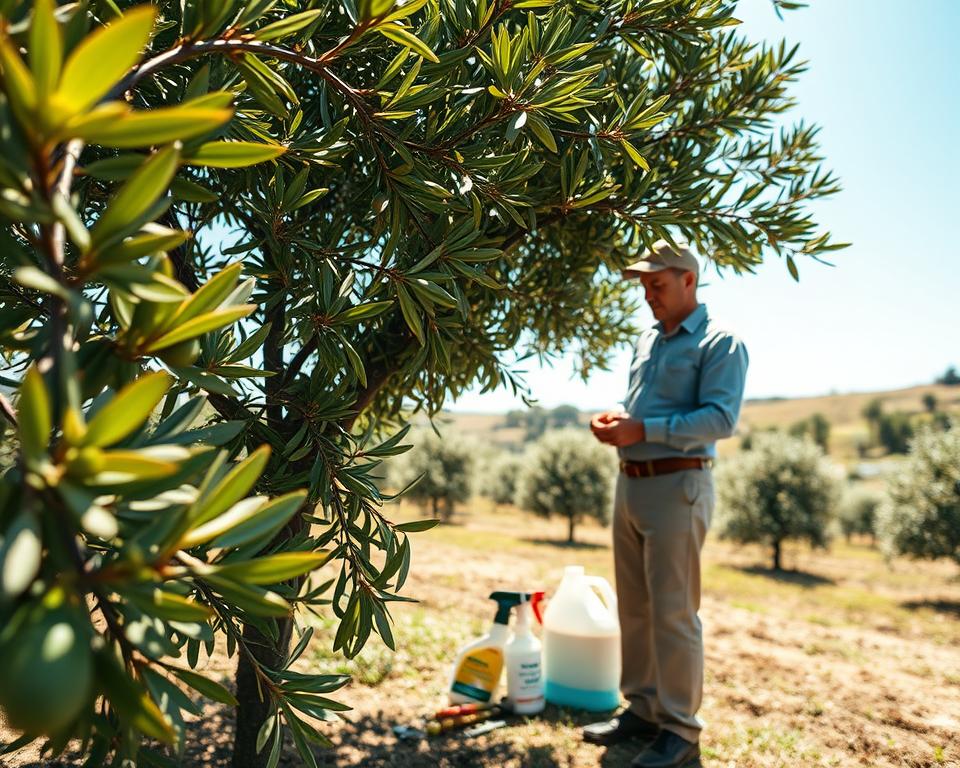
Olive trees face many pests, like the olive fruit fly, black scale, and spider mites. The olive fruit fly is a big problem. It can damage the fruit, cutting down yields and oil quality.
It’s important to watch your trees closely. Look for signs of pests and use traps to find them. This way, you can catch problems early and stop them from getting worse.
Disease Prevention Strategies
Diseases like Verticillium wilt and Phytophthora root rot can destroy olive trees. The best defense is to pick disease-resistant trees and make sure the soil drains well.
Pruning regularly is also key. It helps get rid of sick or damaged branches, stopping diseases from spreading. Keeping your grove clean by removing weeds and trash also helps prevent disease.
Organic Solutions and Treatments
If you’re into organic olive farming, there are good options. Organic pesticides like neem oil and pyrethrin can fight pests without harming good bugs.
For diseases, practices like pruning and keeping things clean are essential. Sometimes, you might need organic fungicides. It’s also important to keep your grove balanced. This helps beneficial bugs and animals keep pests in check.
By using these methods, you can keep your olive trees safe from pests and diseases. This means a healthy and fruitful grove. Keeping pests and diseases at bay is a constant job that needs your attention and action.
Marketing Your Olive Products
Turning olives into products for sale is more than just growing them. It takes a solid marketing plan. I must think about several important things to make my brand stand out.
Packaging and Branding Essentials
Good packaging grabs people’s attention. I aim to make attractive and informative labels for my olive products. I use eco-friendly materials and follow all labeling rules.
Branding is more than labels. It’s about building a brand that speaks to my audience. I tell a story about my olive products’ history and craftsmanship. This helps people appreciate the quality and care in each bottle.
Target Market Identification
Knowing who to market to is key. I look for people who love healthy foods and gourmet items. This helps me tailor my marketing just right.
| Target Market | Characteristics | Marketing Strategies |
|---|---|---|
| Health-Conscious Consumers | Value nutritional benefits, seek organic or non-GMO products | Highlight health benefits, use eco-friendly packaging |
| Gourmet Food Enthuasiasts | Appreciate unique flavors, premium quality | Emphasize craftsmanship, offer tasting samples |
Selling at Farmers’ Markets and Online
Selling at farmers’ markets lets me meet customers face-to-face. It helps build loyalty and get feedback. I make sure my display looks great and I have interesting stories to share.
Online sales let me reach more people. I improve my online look with e-commerce website design and digital marketing. This makes it easy for more people to find my products.
By using both old and new marketing ways, I can sell my olive products to many different people.
Sustainability Practices in Olive Farming
Exploring olive farming, I see sustainability is essential. It’s not just good for the planet; it also boosts olive quality and quantity.
Water Conservation Techniques
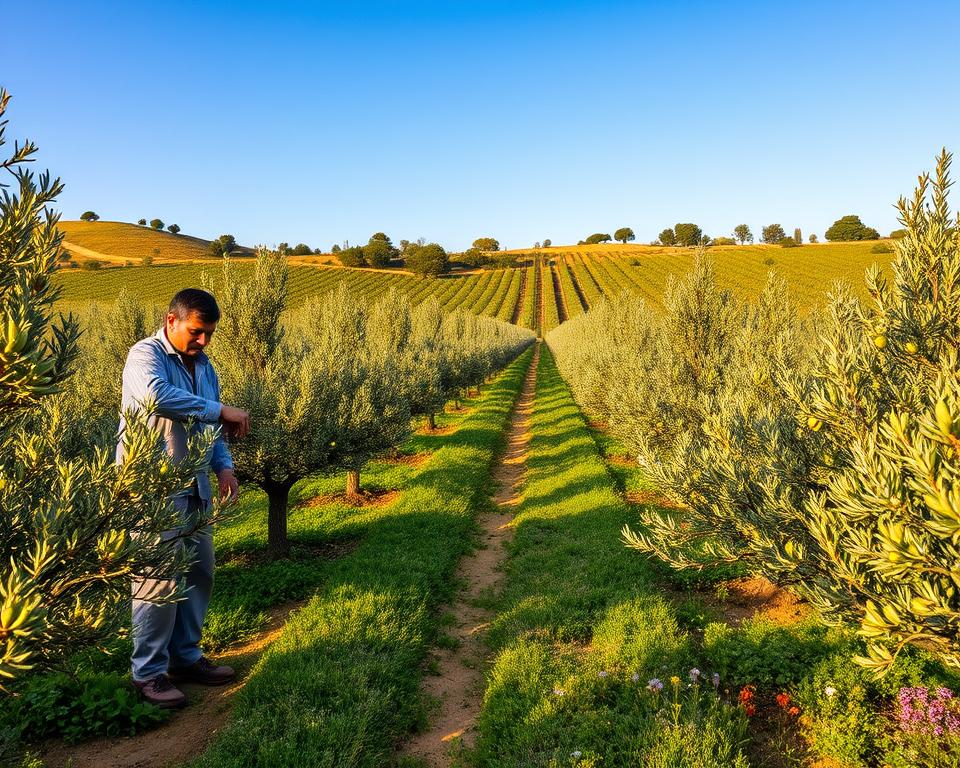
Water saving is key in olive farming. Methods like drip irrigation and mulching cut down on water loss. Drip irrigation sends water straight to the roots, lessening evaporation and runoff. Mulching keeps the soil moist and controls weeds that steal water.
Using these methods greatly cuts down water use. This makes olive farming more eco-friendly, even in dry areas.
Organic Farming Benefits
Organic farming is vital for sustainable olive growing. It avoids harmful chemicals, keeping the soil and ecosystems healthy. This method also produces better olives and a cleaner environment.
Organic farming’s advantages go beyond the farm. They help keep nature in balance and support local wildlife.
Community Involvement and Education
Working with the local community and teaching them about sustainable farming is important. Workshops, farm tours, and educational programs spread the word. They encourage people to adopt green practices.
By getting the community involved, farmers can create a supportive network. This network promotes sustainability. Together, they can have a big positive effect on the environment and local economy.
Future Trends in Commercial Olive Growing
Looking ahead, several trends will shape the future of Commercial Olive Growing. New technologies are changing how olive groves are managed. This makes it easier to improve Olive Production Tips and increase yields.
Innovative Agriculture
Precision agriculture, drones, and satellite imaging are becoming common. They help farmers check tree health, spot pests, and manage water better. These tools allow farmers to make smarter choices, cutting down on waste and boosting olive oil quality.
Global Market Shifts
The world’s love for olive oil is growing. More people are learning about its health benefits. This opens doors for commercial olive growers in Asia and Latin America to reach new customers.
Quality-Driven Demand
There’s a big demand for top-notch, extra virgin olive oil. People are willing to spend more for the best. To meet this need, commercial growers must focus on quality. They need to use the best Olive Production Tips and harvesting methods.