


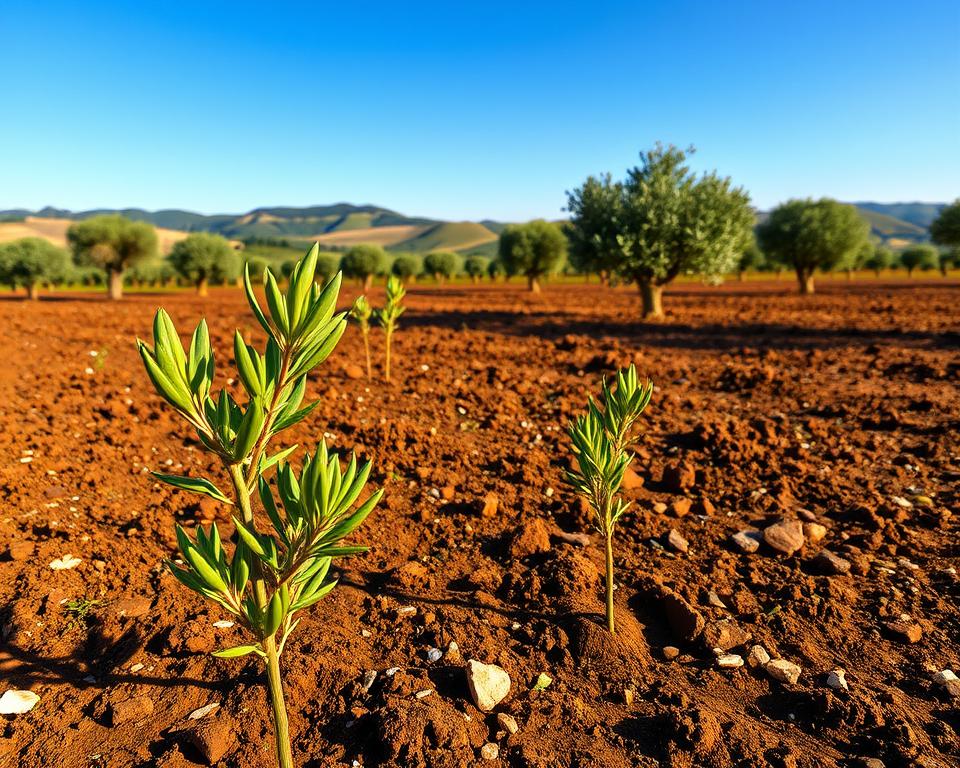
Growing olive trees can be very rewarding. But, it’s important to think about the ideal soil conditions. Did you know olive trees do best in well-draining soil? This mix of sand, silt, and clay is key.
In this guide, I’ll share important factors that affect soil quality. I’ll also give tips on how to make your soil perfect for growing olives. Knowing what your olive trees need will help you get a great harvest.
Key Takeaways
- Understanding the ideal soil composition for olive trees
- Factors that impact soil quality for olive cultivation
- Tips for optimizing soil conditions for a bountiful harvest
- The importance of well-draining soil for olive trees
- How to create a mix of sand, silt, and clay for ideal soil
Understanding Olive Tree Soil Needs
Knowing what olive trees like in their soil is key to growing them well. They need specific soil conditions to stay healthy and produce well.
Importance of Soil Composition
The soil’s makeup is very important for olive trees. Soil composition affects drainage, aeration, and nutrient availability. These are all vital for the trees’ health. A balanced soil mix ensures olive trees get the nutrients they need.
Experts say, “Soil composition is the backbone of olive tree cultivation, influencing the tree’s ability to absorb water and nutrients.”
A good soil structure is essential for healthy olive tree growth, as it allows for proper drainage and aeration.
pH Levels in Olive Tree Soil
Olive trees do best in slightly alkaline to neutral soil, between 6.5 and 8.5 pH. Maintaining the optimal pH range is key for nutrient uptake and overall tree health. Soil pH outside this range can cause nutrient deficiencies and lower tree performance.
Soil Structure and Texture
The soil’s structure and texture are also important for olive trees. Well-drained soils with a mix of sand, silt, and clay are ideal. They offer good aeration and water-holding capacity. Soil texture affects how well the tree absorbs water and nutrients, making it a critical factor in olive tree care.
- Sandy soils drain well but may need more water.
- Clay soils hold moisture but can get waterlogged.
- Loamy soils have a balanced mix, providing good drainage and aeration.
The Best Soil Types for Olive Trees
Choosing the right soil for olive trees is key to their health and growth. Olive trees can grow in many soils, but some are better than others.
The best soil for olive trees needs good drainage, air, and water retention. Well-drained loamy soil and sandy soil are top picks for growing olives.
Well-Drained Loamy Soil
Loamy soil is perfect for olive trees. It has the right mix of clay, silt, and sand. This soil holds water but also drains it well, preventing root rot.
Loamy soil is also very fertile. It feeds olive trees well, helping them grow strong and healthy.

Loamy soil keeps nutrients for the trees. This, along with its drainage, makes it a great choice for growing olives.
Sandy Soil for Olive Cultivation
Sandy soil is good for olive trees, too. It’s great for areas where water can’t stay too long. Sandy soil stops water from making the soil too wet for olive trees.
But, sandy soil dries out fast. You’ll need to water it more often. Adding organic matter helps it hold water better. Despite this, its drainage makes it a favorite for olive groves, even in rainy places.
Soil Drainage: Key to Olive Tree Health
Good soil drainage is key for olive tree health and growth. Poor drainage can cause root rot and other problems that harm the tree. Understanding soil drainage is vital for olive tree growers.
Signs of Poor Drainage
Spotting poor drainage is the first step to fix it. Look out for:
- Water pooling around the tree base
- Yellow or wilted leaves
- Slow growth or branch dieback
Soft, spongy, or waterlogged soil
If you see these signs, act fast to improve drainage. As an expert says,
“Poor drainage can be as bad for olive trees as drought.”
Improving Drainage in Heavy Soils
Heavy soils, like clay, are hard to drain. But there are ways to help:
- Add compost or manure to improve soil structure
- Use raised beds to lift the root zone
- Include sand or other materials to better drainage
These steps can greatly improve soil drainage. This ensures your olive trees get the right moisture. Remember, a well-drained soil is the base of a healthy olive tree.
Nutrients Essential for Olive Trees
Nutrients are key for olive trees to grow well. They need different nutrients to thrive. Knowing what they need is important for their growth.
Nitrogen and Olive Trees
Nitrogen is vital for olive trees. It helps with leaf growth and development. It’s part of chlorophyll, which trees use for photosynthesis.
Keeping nitrogen levels right can be hard, like in soils with little organic matter. Regular soil tests help spot nitrogen shortages. This lets you fix the problem on time.
Phosphorus Needs for Healthy Growth
Phosphorus is also important for olive trees. It helps with root development and flower production. It’s key for energy transfer in the tree, keeping it healthy and productive.
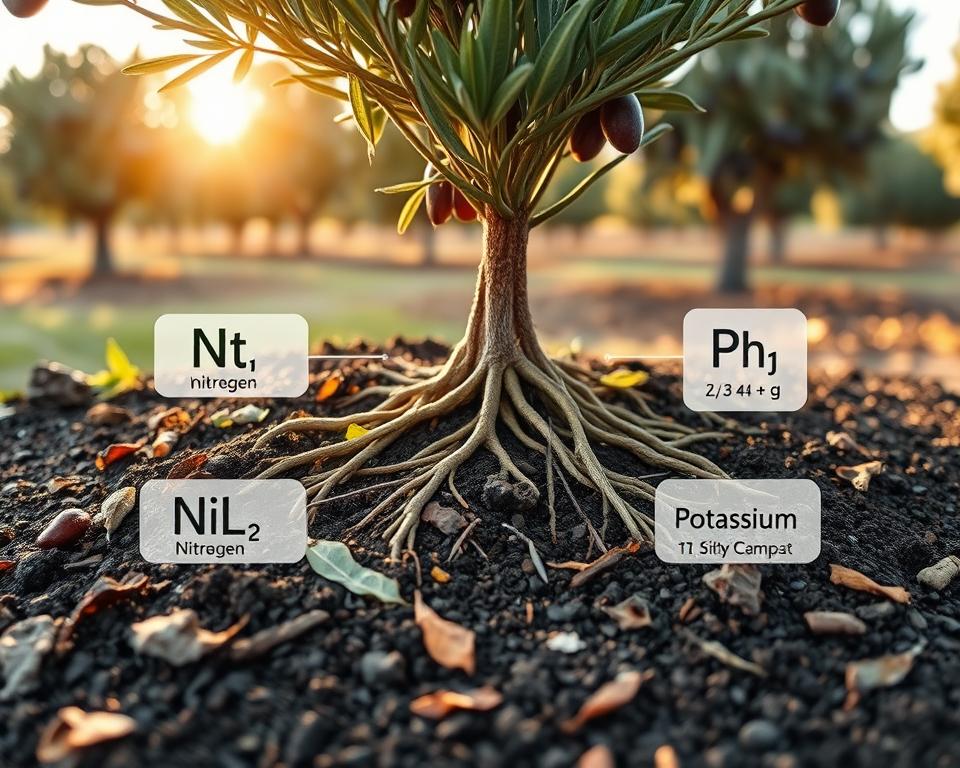
For the best phosphorus levels, soil tests are a must. After the test, you can adjust your fertilizing plan. This ensures your olive trees get the phosphorus they need.
Soil Testing for Olive Trees
Soil testing is key to making your olive trees happy. It helps you know what your soil needs. This way, you can make it better for your trees.
Conducting a Soil Test
To test your soil, start by taking samples from your olive grove. It’s important to get samples from various spots. This gives you a full picture of your soil’s health. Here’s how to do it:
- Choose spots around different trees in your grove.
- Dig a small hole, about 6-8 inches deep. Take a slice of soil from the side.
- Combine multiple samples in a bucket for a single sample.
- Send this sample to a lab for analysis or use a DIY kit.
Make sure to avoid areas with fertilizers or chemicals. They can mess up your test results.
Interpreting Soil Test Results
After getting your results, it’s time to understand them. Look at the nutrient levels, pH, and soil structure. Here’s what to focus on:
- pH Level: Olive trees like a pH between 6.0 and 7.0.
- Nutrient Content: Check nitrogen, phosphorus, and potassium levels. They’re vital for your trees.
- Soil Structure: Know if your soil is sandy, clay, or loamy. This tells you about drainage and air.
With this info, you can choose the right amendments. You might add compost or manure to improve your soil. This boosts nutrients and helps with water flow.
By testing and adjusting your soil, you’ll create a perfect spot for your olive trees to grow.
Amending Soil for Olive Trees
Amending your soil is key to creating a perfect spot for olive trees to grow. Sometimes, your soil needs a little boost to be just right for olive trees.
Knowing about soil amendments is important. There are mainly two types: organic and inorganic.
Organic Amendments
Organic amendments come from natural sources. They make soil better and more fertile. Here are some examples:
- Compost: It’s full of nutrients and helps soil hold water and air better.
- Manure: It adds important nutrients and helps soil life thrive.
- Peat Moss: It’s great for keeping soil moist and right acidity.
Using organic amendments not only makes soil better. It also supports green farming.
Inorganic Soil Amendments
Inorganic amendments are made from synthetic or mineral sources. They give soil a quick nutrient boost. Here are a few:
| Amendment | Nutrient Content | Benefits |
|---|---|---|
| Ammonium Nitrate | High in Nitrogen | Promotes leaf growth and green color |
| Diammonium Phosphate | Rich in Nitrogen and Phosphorus | Enhances root development and fruiting |
| Potassium Sulfate | High in Potassium | Improves overall plant health and resistance to disease |
Inorganic amendments work well, but use them carefully to avoid too much fertilizer.
When picking soil amendments, think about your soil, your olive trees’ needs, and the environment.
Choosing the right amendments and using them right can really help your olive trees grow better.
Location Factors Impacting Soil Quality
Location is key in determining soil quality for olive trees. The land’s characteristics greatly influence tree growth and productivity.
Sunlight Exposure and Soil Impact
Sunlight is vital for soil quality. Full sun areas have different soil moisture levels than shaded ones. Olive trees love full sun but it can dry out the soil.
Farmers can use mulching to keep the soil moist. More sunlight also warms the soil, affecting microbes and nutrient availability.
Elevation and Soil Characteristics
Elevation affects soil in big ways. Higher places have cooler temperatures and different soil types than lower areas.
Soil drainage changes with elevation too. Higher areas drain fast, causing drought stress if not managed. Lower areas might get waterlogged from runoff.
- Soil temperature variations with elevation
- Impact of slope on soil erosion
- Drainage differences at various elevations
Knowing these location factors is key for better soil quality in olive cultivation. By considering sunlight and elevation, farmers can improve soil health and productivity.
The Role of Cover Crops
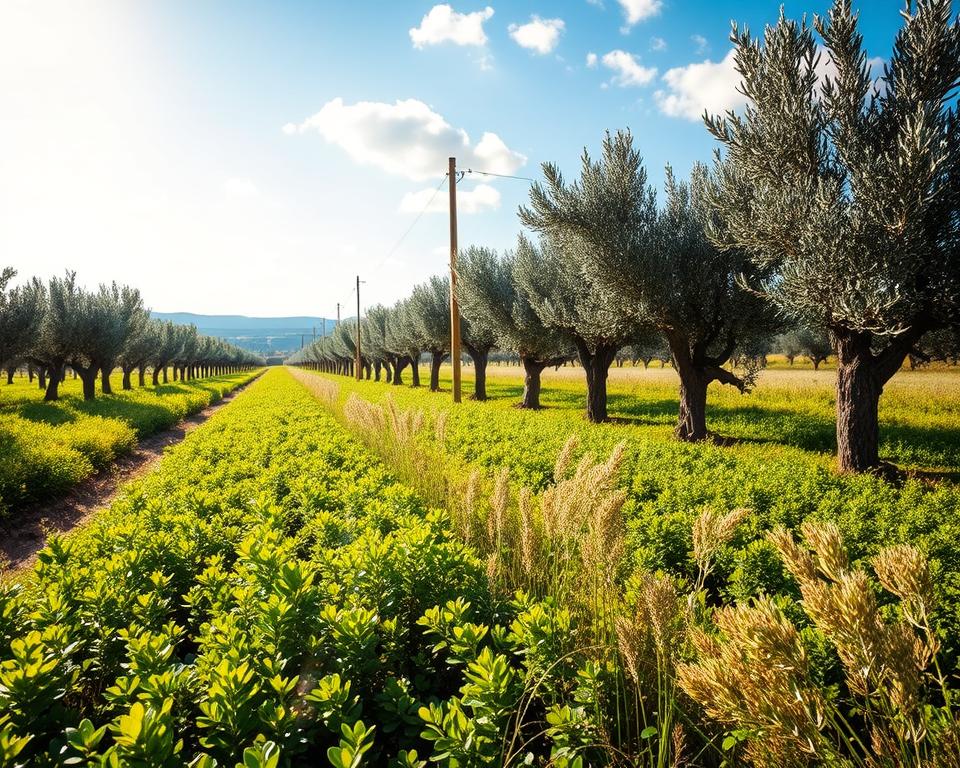
Integrating cover crops into olive orchard management boosts soil health and tree resilience. These plants are grown between crop cycles or tree rows. They serve many purposes that help the soil and trees.
Benefits of Using Cover Crops
Cover crops have many advantages, like soil erosion control, nutrient cycling, and enhanced biodiversity. They protect the soil from erosion, keeping it healthy and preventing topsoil loss. They also add organic matter that decomposes, providing nutrients for olive trees.
A study on sustainable agriculture found that cover crops reduce soil erosion and improve health. This makes farming systems more resilient. [1] This is key in olive orchards, where soil health affects tree productivity and olive quality.
Recommended Cover Crops for Olive Orchards
Choosing the right cover crops for olive orchards is critical. Legumes like clover and vetch are great because they fix nitrogen, reducing fertilizer needs. Grasses such as rye and oats help stabilize the soil and fight weeds.
Using a mix of cover crops creates a balanced ecosystem. This supports a wide range of beneficial insects and microorganisms. Experts say a diverse cover crop mix boosts biodiversity and ecosystem services in olive orchards. This leads to a more sustainable farming system.
“Using cover crops in olive orchards not only improves soil health but also contributes to a more resilient and sustainable agricultural practice.”
Soil Management Practices
To keep your olive orchard healthy for years, good soil management is key. It makes the soil fertile and strong. This helps your olive trees grow well and stay productive.
Crop Rotation Strategies
Crop rotation is very important for your olive trees. It stops diseases, adds nutrients to the soil, and boosts biodiversity. Legumes are great for olive orchards because they add nitrogen to the soil.
- Legumes: Beans, peas, and lentils are excellent choices for crop rotation.
- Grasses: Some grasses can help improve soil structure and reduce erosion.
Mulching for Moisture Retention
Mulching keeps the soil moist, stops weeds, and controls soil temperature. Olive orchards often use organic mulches like straw, wood chips, or leaves.
| Mulch Type | Benefits | Considerations |
|---|---|---|
| Organic Mulch (straw, wood chips) | Retains moisture, suppresses weeds | May need replenishment |
| Leaves | Rich in nutrients, easy to source | May mat down and prevent water penetration |
| Grape pomace | Rich in nutrients, beneficial for soil biota | Availability may be limited |
Using these soil management practices can make your olive tree orchard better and more productive. Keep checking and changing your methods to keep your trees healthy for a long time.
Troubleshooting Common Soil Issues
Soil problems can pop up in olive groves, even with good planning. I’ll show you how to spot and fix common issues. This will help keep your trees healthy and productive.
Recognizing Nutrient Deficiencies
Spotting soil deficiencies is key for a thriving olive grove. Watch for yellow leaves, slow growth, or low fruit. Regular soil tests can find nutrient gaps, helping you fix them.
Managing Soil-borne Diseases
Soil diseases can harm olive trees a lot. To fight them, I suggest using natural or mixed pest control methods. This might include changing crops, using sunlight to kill pests, or introducing beneficial bugs.
By tackling soil problems well, you can make your olive grove stronger. This leads to better crops and a greener operation.