


Did you know that proper irrigation can increase olive tree yields by up to 20%? I’m passionate about growing healthy olive trees. I’ve found that watering them right is key to their success. Even though olive trees are tough, they need careful watering, more so in dry areas.
Knowing how much water your olive trees need is the first step. By following best practices for olive tree irrigation, you can give them the water they need when they need it. This will help them grow better and produce more fruit.
Key Takeaways
- Understand the water needs of your olive trees based on their age, soil type, and climate.
- Choose the most effective irrigation system for your olive grove.
- Learn the best practices for watering olive trees to maximize their yield.
- Discover how to adjust irrigation based on weather conditions.
- Implement a maintenance routine to ensure your irrigation system operates efficiently.
Understanding Olive Trees’ Water Needs
To grow healthy olive trees, knowing their water needs is essential. They are drought-tolerant but need enough water, mainly during growth phases.
Ideal Soil Conditions
Olive trees do best in well-draining soil. This is key for their roots. Soil with good drainage stops waterlogged conditions that harm roots. The soil should mix sand, silt, and clay for the best drainage and moisture.
For more on soil conditions, check this guide.
Growth Phases and Water Requirements
Olive trees need different amounts of water at different times. In the growing season, they need more water for growth and fruit. But in the dormant season, they need less as they grow slower.
For a watering schedule for olive trees, give them more water in spring and summer. Cut back in fall and winter when they’re dormant.
Types of Irrigation Systems for Olive Trees
Olive grove owners have many irrigation system options. Each has its own benefits and things to think about. The right system can greatly affect the health and success of olive trees.
Drip Irrigation
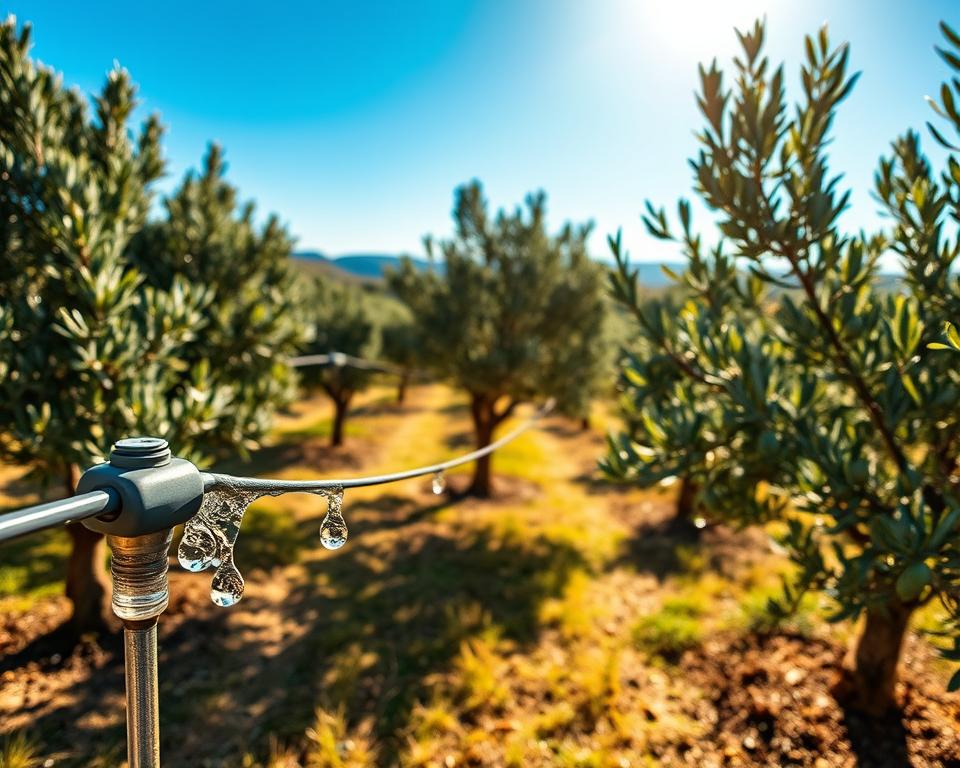
Drip irrigation is very efficient. It sends water straight to the roots, cutting down on evaporation and runoff. This precision irrigation method is great for places where water is limited.
Drip irrigation lets growers adjust water for each tree. They can change the flow and where the water goes. This way, they use just the right amount of water, saving it and making it go further.
Sprinkler Systems
Sprinkler systems are also popular for olive groves. They can water bigger areas and help protect against frost. Sprinklers spread water like rain, covering the soil.
But sprinkler systems need careful use to avoid too much water. It’s important to space them right and adjust them to water evenly. This helps prevent diseases that like wet conditions.
Subsurface Irrigation
Subsurface irrigation puts lines under the soil. It’s efficient, like drip irrigation, but is hidden underground. This can make farming easier by not getting in the way.
But, installing and keeping up with subsurface irrigation can be harder. It’s worth it for the long-term benefits like less soil erosion and better water use.
In summary, picking the right irrigation system for olive trees depends on many things. These include the climate, soil, and what the grower needs. Knowing the good and bad of each system helps olive grove owners make the best choice for their water use.
Factors Affecting Water Requirements
Several factors influence how much water olive trees need. Knowing these factors helps you adjust your watering schedule. This ensures your trees get the right amount of water.
Climate and Weather Patterns
Climate and weather greatly affect olive tree water needs. Trees in hot, dry places need more water than those in cooler, wetter areas. It’s important to watch the weather and adjust your watering plan.
For example, during droughts or heatwaves, trees may need more water. But when it rains or cools down, you can water them less often.
Soil Type and Drainage
Soil type and drainage also play a big role. Soils that hold water less well might need less frequent but deeper watering. On the other hand, well-draining soils might need more water.
Knowing your soil type is key. For instance, clay soils hold water longer than sandy soils. Adjusting your watering based on soil type helps your trees get the right amount of water.
Tree Age and Health
The age and health of olive trees also affect their water needs. Young trees need more water as they grow. Mature trees need enough water, too, but not as much as young ones.
Stressed or sick trees might need different amounts of water. Keeping an eye on your trees’ health and adjusting your watering can help them grow well.
| Factor | Description | Impact on Water Requirements |
|---|---|---|
| Climate | Hotter climates increase evapotranspiration | Higher water requirements |
| Soil Type | Poor drainage soils retain more water | Less frequent but deeper watering |
| Tree Age | Younger trees have developing root systems | More frequent watering |
By considering these factors and adjusting your watering, you can make sure your olive trees get the right amount of water. This promotes healthy growth and productivity.
Best Practices for Watering Olive Orchards
To keep your olive orchard healthy, knowing how to water is key. These tips help your trees get the right water at the right time. This leads to strong growth and better harvests.
Frequency of Irrigation
How often to water depends on soil, weather, and tree age. Young olive trees need more water as they grow. Older trees need less but should stay moist, mainly when they’re fruiting.
Water your trees when the top 2-3 inches of soil are dry. This keeps them moist without too much water.
Amount of Water Needed
Finding the right water amount for your trees is important. It changes based on tree age, soil, and weather. Olive trees usually need 20-25 inches of water per year, from rain or irrigation.
Check soil moisture to adjust water amounts. Soil moisture sensors help you know when to water, ensuring your trees get just enough.
Timing of Water Application
When you water is as important as how much. Water in the early morning or late evening to reduce evaporation and help the soil absorb it better.
Don’t water when it’s hottest to save water. Also, adjust watering based on your trees’ growth stage, like more during fruiting.

By balancing watering frequency, amount, and timing, you create a great schedule. This boosts your trees’ health and improves your olive harvest.
Signs of Overwatering and Underwatering
Knowing the signs of watering problems in olive trees is key for any grove owner. Both too much and too little water can harm the trees. This can affect their health and how much they produce.
Recognizing Stress Symptoms
Olive trees show certain signs when they don’t get the right water. Overwatering can rot the roots, causing:
- Yellowing leaves
- Wilting or droopy branches
- Less fruit
Underwatering can lead to:
- Dry, crispy leaves
- Slow growth
- More pests and diseases
Spotting these signs early is vital. Regular checks and adjusting the water schedule can help fix these problems.
Correcting Watering Issues
To fix watering problems, first figure out if it’s too much or too little water. Changing the irrigation schedule is a good start. For olive trees, water deeply but not too often to help roots grow deep.
When tweaking your watering, remember:
- Check soil moisture with your finger or a meter.
- Change how often and how much you water based on weather, soil, and tree age.
- Make sure water drains well to avoid soggy soil.
By learning how to water olive trees right and watching for watering stress signs, you can keep your olive grove healthy and productive.
Seasonal Irrigation Strategies
Knowing how to water your olive grove changes with the seasons is key. As seasons shift, so do your trees’ water needs. This means you need to adjust your watering schedule.
Olive trees need more water in spring and summer. This helps them grow and produce fruit. But in fall and winter, they need less water. Yet, it’s important to keep them moist, even in dry areas.
Spring and Summer Watering
In spring, olive trees grow fast, making new leaves and fruit. They need more water then. Good spring watering helps them grow and fruit well. Summer is also hot and dry, so trees need regular water to avoid stress.
To water well in spring and summer, follow these tips:
- Check the soil moisture often.
- Change your watering plan with the weather.
- Use drip irrigation systems to water roots directly.
| Month | Irrigation Frequency | Water Amount |
|---|---|---|
| April | Twice a week | 50 liters/tree |
| July | Thrice a week | 70 liters/tree |
| September | Twice a week | 60 liters/tree |
Fall and Winter Considerations
In fall, olive trees need less water as it gets cooler. But they should not dry out, even if it’s a dry fall. In winter, they are dormant and need the least water. But the soil should not dry out completely.
Less water in fall and winter helps avoid root rot and other issues. It’s also a good time to check your irrigation system for repairs or adjustments.
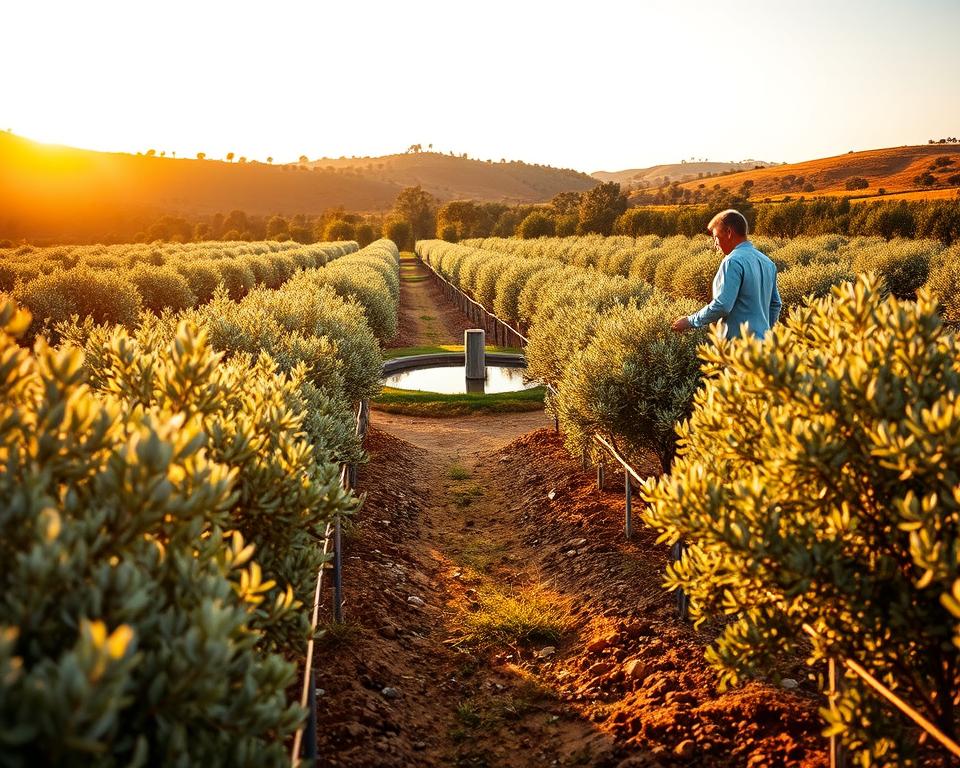
Adjusting your watering to the seasons helps your olive grove thrive. The secret to good irrigation is knowing what your trees need at each time of year.
Soil Moisture Monitoring Techniques
To ensure efficient olive tree irrigation, it’s key to check soil moisture. This helps farmers decide when to water their trees.
There are many ways to check soil moisture. Each method has its own benefits. The best one depends on cost, accuracy, and how easy it is to use.
Precision Monitoring with Soil Moisture Sensors
Soil moisture sensors are a modern tool for checking soil moisture. They give real-time data. This lets farmers adjust their watering plans.
Types of Soil Moisture Sensors:
- Capacitance sensors
- Tensiometers
- Time-domain reflectometry (TDR) sensors
| Sensor Type | Accuracy | Cost |
|---|---|---|
| Capacitance | High | Moderate |
| Tensiometers | Moderate | Low |
| TDR | High | High |
Manual Testing Methods for Soil Moisture
Manual methods are good for those who like a traditional or budget-friendly way. The “feel and appearance method” and using a soil probe are examples.
Steps for Manual Testing:
- Dig a small hole to the desired depth.
- Take a soil sample and squeeze it gently.
- Observe the soil’s behavior: if it crumbles, it’s dry; if it holds its shape but doesn’t shine, it’s moist; if it shines or forms a ribbon, it’s wet.
Using these methods, farmers can improve their irrigation. This ensures olive trees get the right water at the right time. It boosts tree health and saves water.
Benefits of Proper Irrigation for Olive Yield
Proper irrigation is key for the best olive yield and quality. When olive trees get the right water at the right time, they produce more and better fruit.
Improved Fruit Quality
Good irrigation makes olives better by keeping trees hydrated all season. Consistent moisture levels help fruit grow bigger and have more oil. Experts say this can really boost olive oil production. For more on efficient irrigation, check out this resource on sustainable olive production.
The table below shows how different irrigation levels affect olive fruit quality:
| Irrigation Level | Average Fruit Size | Oil Content |
|---|---|---|
| Low | Small | Low |
| Moderate | Medium | Medium |
| High | Large | High |
Enhanced Tree Longevity
Good irrigation also makes olive trees live longer. It keeps the soil moist, reducing stress and disease. Healthy trees can last for decades, giving farmers a steady income.
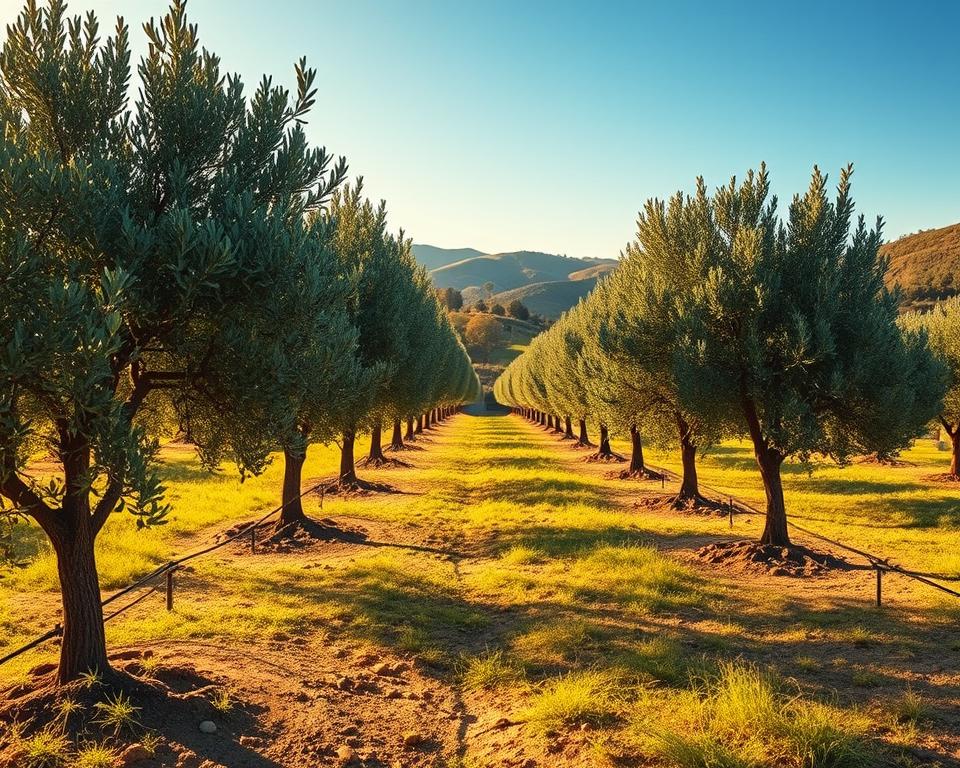
Also, well-watered olive trees handle drought better. This is important as the weather gets more unpredictable due to climate change.
Common Irrigation Mistakes to Avoid
To make sure your olive trees do well, avoid common irrigation mistakes. Good irrigation means giving the right amount of water. It also means doing it in a way that fits the tree’s needs and the weather.
Understanding mistakes in watering olive trees is key. Two big errors to avoid are not considering soil type and not watching the weather.
Ignoring Soil Composition
The soil your olive trees are in is very important. Soil affects how water drains, how air gets in, and how well the tree absorbs water and nutrients. If you ignore this, you might water too much or too little. Sandy soils need more water because they drain fast. Clay soils need less because they hold water longer.
Overlooking Weather Conditions
Weather like temperature, rain, and humidity changes how much water olive trees need. Not adjusting watering for the weather can waste water and stress the trees. For example, when it rains a lot, you should water less. But when it’s hot and dry, you might need to water more often.
Knowing these mistakes and avoiding them can help your olive trees grow better. Use an irrigation system made for your olive trees. Adjust it based on the soil and weather. This can really help your trees grow well and live longer.
To make your irrigation even better, check the soil moisture. Then, change your watering schedule as needed. This way, you can use water better and make sure your olive trees get the right moisture for growth.
Sustainable Irrigation Practices
Using sustainable irrigation is key for a healthy olive grove and less harm to the environment. Efficient irrigation methods help cut down water waste. This makes sure your olive trees get the right amount of water.
Rainwater harvesting is a smart choice. It collects and stores rainwater for irrigation. This saves clean water and lowers the demand on city water supplies. Using rainwater helps your olive trees get water more efficiently.
Water Conservation Techniques
Greywater systems are also a good choice. Greywater comes from sinks, showers, and washing machines. It can be cleaned and used for irrigation. This cuts down on the need for clean water, making your irrigation better for the planet.
By choosing these sustainable methods, you help your olive grove thrive. You also support a greener farming world.