


Olive trees have been key in Mediterranean farming for thousands of years. Over 100 million olive trees are grown globally. As a gardener, learning to shape these trees is vital for their health and looks.
Good pruning techniques improve the tree’s shape and increase its yield. In this guide, I’ll cover the basics of olive tree shaping. You’ll learn about the right tools and how to shape both young and mature trees step by step.
By the end of this guide, you’ll know how to keep your olive trees beautiful and healthy.
Key Takeaways
- Understand the importance of pruning for olive tree health
- Learn the right tools and techniques for shaping olive trees
- Discover step-by-step guides for shaping young and mature trees
- Improve the aesthetic appeal and productivity of your olive trees
- Master the art of olive tree shaping with confidence
Introduction to Olive Tree Shaping
Olive tree shaping is more than just keeping the tree looking good. It’s also key to its health. As I explore olive tree care, I see how important shaping is.
Importance of Shaping Olive Trees
Shaping olive trees is vital for their health and how well they produce fruit. Pruning and training help with air flow, lower disease risk, and more fruit. Regular shaping also keeps the tree’s shape, making olive picking easier.
Benefits of Shaping Olive Trees:
- More fruit
- Healthier trees
- Better air flow
- Less disease
- Easier picking
Overview of Common Shaping Techniques
There are many ways to shape olive trees, each with its own benefits. Knowing these methods is key for good tree care.
| Technique | Description | Benefits |
|---|---|---|
| Central Leader | A method where a central trunk is maintained, and branches are trained around it. | Promotes vertical growth, easier to manage. |
| Open Center | Involves removing the central leader, allowing for an open structure. | Improves air circulation, reduces disease risk. |
| Vase Shaping | A technique that creates a vase-like shape, promoting fruiting branches. | Enhances fruit production, aesthetically pleasing. |
By using these shaping techniques, you can greatly improve your olive trees’ health and fruiting.
Understanding the Olive Tree
To shape an olive tree well, you need to know its parts and how it grows. This knowledge helps you make smart choices when pruning and training your tree.
Anatomy of the Olive Tree
The olive tree has roots, trunk, branches, and leaves. Each part is key to the tree’s health and fruit production. The root system gets water and nutrients from the soil. The trunk and branches support the leaves and fruit.

Types of Olive Trees for Shaping
Not all olive trees are the same when it comes to shaping. For example, Arbequina and Koroneiki trees grow compactly, perfect for shaping. But, bigger trees like Frantoio and Pendolino need more pruning to keep their shape.
For more tips on pruning and training olive trees, check out https://www.oliveoilsource.com/info/pruning-and-training.
Ideal Growing Conditions
Olive trees love well-drained soil and full sun. They can handle some drought but do best with regular water. Knowing the best growing conditions for your tree is key to its health.
| Condition | Ideal Requirement | Impact on Tree |
|---|---|---|
| Soil | Well-drained | Prevents root rot and ensures healthy root development |
| Sunlight | Full sun | Promotes fruiting and overall tree health |
| Watering | Regular | Supports growth and fruit production |
Knowing about olive tree biology helps you care for your tree better. This knowledge will help you make the best choices for your tree’s health and growth.
Tools and Materials Needed
Before you start shaping your olive tree, gather the necessary tools and equipment. The right tools make the task easier and ensure your tree is pruned effectively and safely.
Essential Pruning Tools
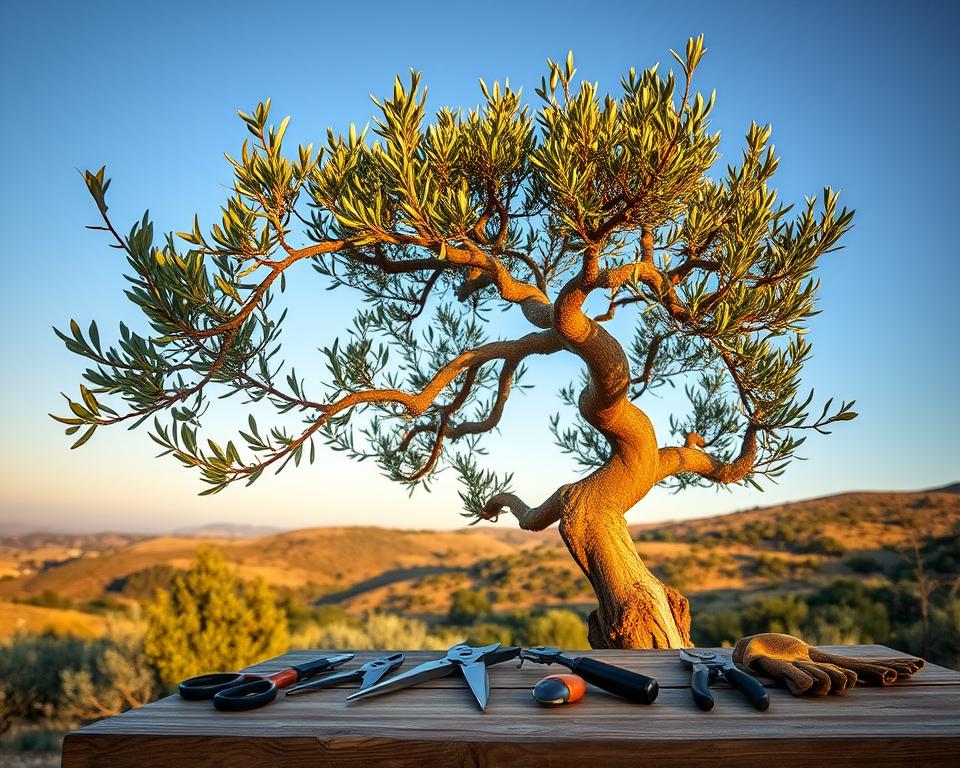
Pruning is key to shaping your olive tree. You’ll need a few essential tools. Pruning shears are vital for trimming smaller branches. For thicker branches, use loppers. And for the thickest branches, a pruning saw is necessary.
Protective Gear for Pruning
Pruning can be dangerous, so protecting yourself is important. Gloves protect your hands from thorns and splinters. Safety goggles keep your eyes safe from debris. And a long-sleeved shirt protects your skin from scratches.
“The right protective gear can make a significant difference in your pruning experience, ensuring you’re safe while shaping your olive tree.”
Optional Tools for Advanced Shaping
If you want to improve your olive tree shaping skills, there are optional tools. Hedge trimmers help keep your tree’s shape between pruning sessions. A ladder or step stool is needed for reaching high branches. And tree pruning clippers are great for precise cuts.
Best Times for Shaping an Olive Tree
To shape an olive tree well, knowing the best times to prune is key. This depends on the season and weather. Shaping mature olive trees needs a good grasp of their growth and how they react to the environment.
Seasonal Considerations
The best time to prune olive trees varies by age, climate, and pruning goals. Pruning during the tree’s dormant season is usually best. This is late winter to early spring. It’s when you can safely cut out dead or damaged branches without harming the tree’s growth.
Seasonal Pruning Guide:
| Season | Pruning Activity | Benefits |
|---|---|---|
| Late Winter to Early Spring | Major pruning | Promotes healthy growth, removes dead branches |
| Summer | Light pruning | Maintains shape, encourages fruiting |
| Fall | Minimal pruning | Prepares tree for dormancy |
Weather Concerns During Shaping
Weather is very important when shaping olive trees. Extreme weather can stress the tree, making it more likely to get sick or attract pests. It’s best to avoid pruning when the weather is extreme.
“Pruning during the wrong weather conditions can be detrimental to the health of your olive tree. Always check the forecast before you start pruning.”
Think about the weather when you’re pruning your olive tree. For example, pruning before a big rain can lead to fungal infections. Pruning in the heat can also stress the tree.
Knowing the best times to prune and watching the weather helps keep your olive tree healthy. Training your olive tree’s shape takes patience, knowledge, and careful attention.
Step-by-Step Guide to Shaping
Shaping olive trees is more than just making them look good. It’s also about keeping them healthy and productive. Here, we’ll cover the basics of assessing the tree, shaping young trees, and pruning older ones.
Initial Assessment of the Tree
Before you start, check the tree’s condition. Look for dead or diseased branches that need to be cut off. Also, identify any branches that are crossing or rubbing against each other.
Check the tree’s canopy for stress or disease signs. Look for sparse foliage or pests. This will help you plan your pruning.
Techniques for Young Olive Trees
Young olive trees need careful training. Choose a central leader and remove any competing branches. This helps the tree grow straight and balanced.
Use soft pruning cuts to remove weak growth. This promotes a strong and healthy tree. Also, make sure the tree gets enough water and fertilizer to grow well.
Pruning Mature Olive Trees
Mature olive trees need regular pruning to stay in shape and produce fruit. Start by removing dead, diseased, or damaged branches. Then, thin out the center to let more sunlight in.
When pruning, make clean cuts just above a growth node. This encourages new growth. Keep an eye on the tree’s shape and make adjustments as needed.
By following these steps, you can learn to shape olive trees well. Remember, patience, observation, and flexibility are key as the tree grows.
Common Shaping Styles
Olive tree shaping offers many styles, fitting different trees and uses. Whether you have an old tree or a young one, knowing the styles is key. This knowledge helps you get the look you want.
Traditional vs. Modern Styles
Olive tree shaping falls into two main categories: traditional and modern. Traditional styles stick to old methods, looking simple and natural. Modern styles use new techniques for a modern look.
Choosing between these styles depends on your desired look and maintenance level. Traditional styles need less pruning, while modern ones require more to keep their shape.
Natural vs. Formal Shapes
Deciding between natural and formal shapes is also important. Natural shapes follow the tree’s growth, looking organic. Formal shapes need precise pruning for a geometric design.
- Natural shapes are great for those who like easy care.
- Formal shapes are best for striking designs.
Popular Styles Among Growers
Growers often choose these styles:
- The “Vase Shape” boosts fruiting and air flow.
- The “Central Leader” style is good for young trees, helping them grow strong.
- The “Espalier” style is perfect for training trees against walls or trellises.
Each style has its own benefits, fitting different trees. Knowing these styles helps you choose the best for your trees. This ensures they are well-maintained and grow well.
Troubleshooting Common Issues
Shaping olive trees can be rewarding but also challenging. Even experienced growers face problems that affect their trees’ health and looks.
Signs of Improper Shaping
Improper shaping can cause uneven growth, less fruit, and more disease. Look out for these signs:
- Over-pruning stresses the tree and can cause dieback.
- Incorrect cuts can lead to infected wounds.
- Not removing dead or diseased branches lets problems spread.
To avoid these problems, learning how to trim an olive tree well is key.
Diseases and Pests to Watch For
Olive trees face diseases and pests, often due to bad shaping. Here are some common issues:
| Disease/Pest | Symptoms | Action |
|---|---|---|
| Olive knot | Galls or knots on branches | Prune affected areas, disinfect tools |
| Olive tree scale | Small, brown bumps on leaves and stems | Use horticultural oil, inspect regularly |
| Root rot | Yellowing leaves, soft roots | Improve drainage, avoid overwatering |
Regular checks and care can stop these problems. For tough cases, get help from olive tree trimming services.
Recovery Techniques for Mistakes
Don’t worry if you mess up while shaping your olive tree. Here’s how to fix it:
- For small cuts or wounds, use a wound dressing to fight infection.
- If you’ve over-pruned, cut back on water and fertilizer to reduce stress.
- For big mistakes, get advice from a pro arborist or olive tree expert.
Knowing the common problems and how to fix them helps keep your olive tree healthy and looking good for years.
Maintaining Your Shaped Olive Tree
Keeping your olive tree healthy is key. After shaping, a regular care routine is vital. This routine helps your tree stay beautiful and productive.
Regular Maintenance Routines
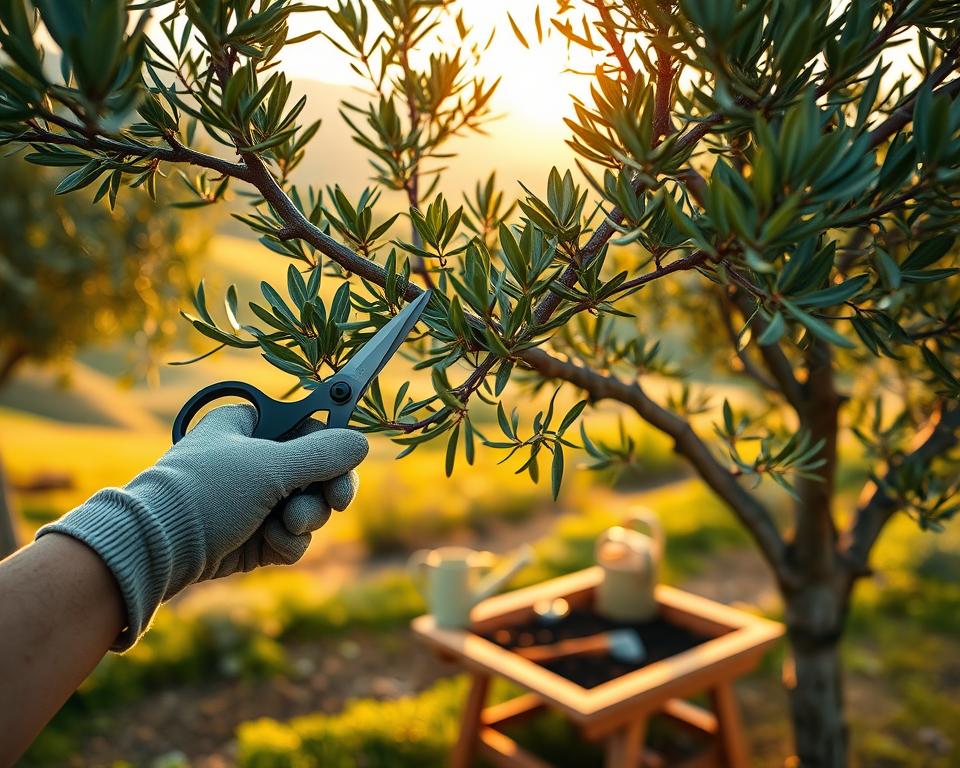
Check your olive tree often for diseases or pests. Also, look for damage from bad weather. Pruning is important to keep the shape and promote growth.
Remove dead or sick branches to stop disease spread. Clean your pruning tools between cuts to avoid disease transfer. “A well-maintained olive tree is not just about looks; it’s about a healthy environment,” says an expert.
Seasonal Care Tips
Seasonal care is essential for your olive tree’s health. In spring, prune and check for winter damage. Summer is for watering, as it gets dry. In fall, mulch or compost to keep moisture and soil warm.
- Spring: Prune and inspect for damage
- Summer: Ensure adequate watering
- Fall: Apply mulch or compost
- Winter: Protect from extreme cold
Fertilization and Watering Practices
Fertilizing is critical for olive tree care. Use a balanced fertilizer with nitrogen, phosphorus, and potassium. Mature trees need fertilizing once a year.
Watering depends on the tree’s age and climate. Young trees need more water to grow roots. Mature trees can handle drought but benefit from regular watering.
“Proper watering and fertilizing are the foundation of olive tree care. Knowing your tree’s needs ensures it stays healthy and fruitful.”
By following these care tips, your olive tree will thrive. It will remain a beautiful and fruitful part of your landscape.
Conclusion and Final Tips
Learning to shape olive trees takes time, patience, and practice. This guide has given you the tools to shape your olive trees well. Now, you can start to see your trees grow and change.
Key Techniques for Successful Shaping
To get the shape you want, you need to know how to Training Olive Tree Shape. Pick the right branches to cut and use the best olive tree pruning techniques. This helps your tree grow strong and healthy.
Support for New Growers
Shaping an olive tree can be tough if you’re new. Start with the basics and get better slowly. With practice, you’ll feel more confident in your tree-shaping skills.
Further Learning Resources
If you want to learn more, check out online courses, books, and expert advice on olive tree shaping. These resources offer great tips and can help you improve your skills.