


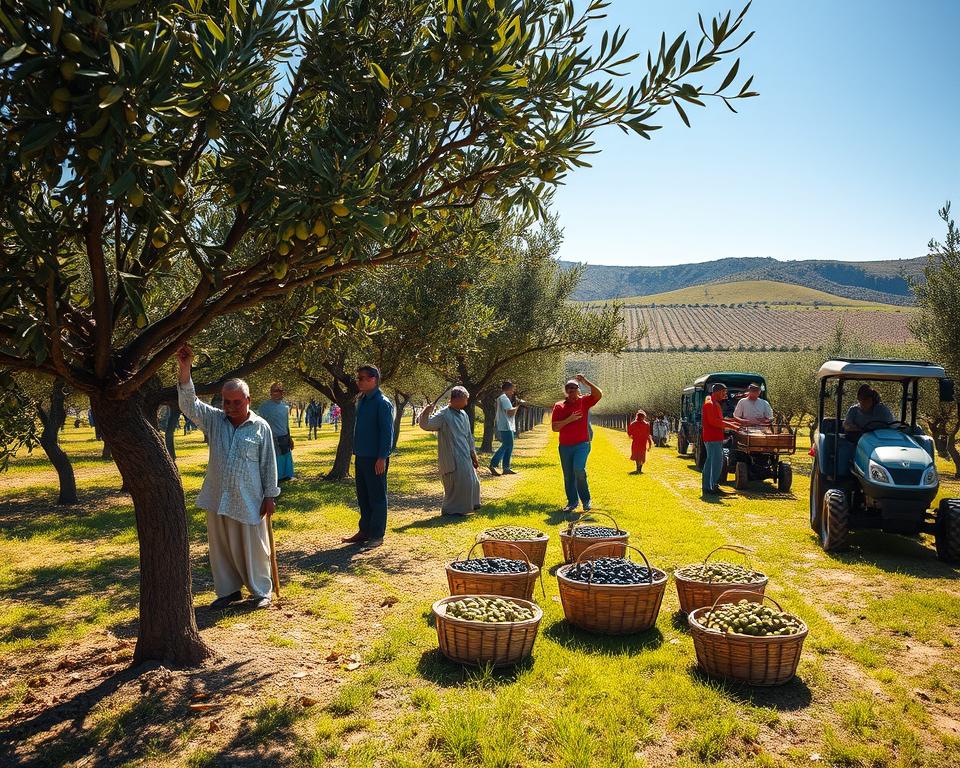
The Mediterranean region is home to over 95% of the world’s olive oil. Countries like Italy, Spain, and Greece lead in production. As I explore olive harvesting, I’m eager to share its ancient secrets.
The olive harvest season is a big deal, starting a new cycle of production. The harvesting techniques have been perfected over centuries. Knowing these methods helps us value this delicacy more.
Key Takeaways
- The global olive oil production is dominated by Mediterranean countries.
- Olive harvesting is an ancient practice with significant cultural importance.
- The techniques used in olive harvesting have been refined over centuries.
- Olive oil production is a significant contributor to the economies of producing countries.
- The quality of olive oil is heavily dependent on the harvesting process.
The Importance of Olive Harvesting in Culinary Culture
Olive harvesting is more than just picking olives. It’s a big part of the Mediterranean’s culinary culture. For centuries, it has shaped the way people cook and eat.
Historical Significance to Global Cuisine
Olive harvesting has greatly influenced global cuisine, mainly in the Mediterranean. For thousands of years, olives were valued by ancient Greeks and Romans. They were used for food and medicine.
This tradition has led to many different cooking styles. Olives and olive oil are now key parts of Mediterranean diets. They add flavor and health benefits to many dishes.
Over time, different places have found their own ways to use olives. In Greece, olive oil is used a lot in salads and stews. In Italy, olives are a big part of pasta sauces and pizzas.
Regional Variations in Harvesting Techniques
Every region in the Mediterranean has its own way of harvesting olives. This is because of things like the weather, soil, and type of olive tree. For example, in Greece, people often pick olives by hand. In Spain and Italy, machines are used more for making olive oil.
These different methods show how adaptable olive farming is. They also add to the rich variety of Mediterranean cooking. By learning about these differences, we can better understand the importance of olive harvesting in local cuisines.
Understanding the Olive Tree Lifecycle
To truly appreciate the olive harvest, it’s key to know the olive tree’s lifecycle. This includes its growth stages and what affects its health. The lifecycle of an olive tree is long and complex, needing careful planning and maintenance.
Growth Stages
The journey of an olive tree starts with planting a seed. It germinates and grows into a sapling. As it matures, it goes through several stages:
- Establishment Phase: The tree develops its root system and grows its first leaves.
- Growth Phase: The tree grows more, developing its canopy and producing its first fruits.
- Maturation Phase: The tree reaches full maturity, producing high-quality olives.
- Production Phase: The mature tree keeps producing olives, with yield increasing over time with care.
Knowing these stages is key for olive grove maintenance. It helps farmers care for the tree at each stage, ensuring its health and productivity.
Factors Affecting Olive Tree Health
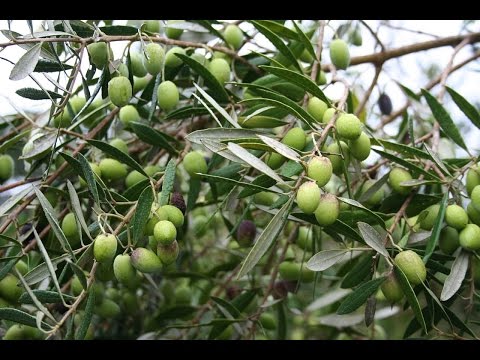
Several factors can impact an olive tree’s health and productivity. These include:
- Soil Quality: Olive trees prefer well-drained, fertile soil with a pH between 6.5 and 8.5.
- Irrigation: Adequate water is key, more so in the tree’s early stages and during droughts.
- Pruning Practices: Regular pruning keeps the tree’s shape, promotes growth, and boosts olive production.
- Pest and Disease Management: Protecting the tree from pests and diseases is vital for its health and productivity.
By managing these factors, farmers can keep their olive trees healthy and productive. This leads to a successful harvest.
Types of Olives: Which Ones Are Harvested?
Olive lovers know that the type of olive picked greatly affects the taste and quality of the final product. There are many types of olives, each with its own special traits and uses.
Green vs. Black Olives: Key Differences
The main difference between green and black olives is their ripeness. Green olives are picked early, while black olives are left to ripen on the tree. This changes their taste and texture.
Green olives are firmer and more bitter, perfect for some recipes. Black olives, on the other hand, are softer and sweeter. They’re great for dishes where you want a deeper olive flavor.
Popular Olive Varieties Grown in the U.S.
In the United States, many olive types grow well in different climates. Some favorites include:
| Olive Variety | Characteristics | Primary Use |
|---|---|---|
| Mission | Fruity, slightly sweet | Olive oil production |
| Arbequina | Buttery, smooth | Table olives, olive oil |
| Manchineo | Fruity, slightly bitter | Olive oil production |
Knowing about these olive types and their traits is key for both growers and buyers. The olive picking season changes by area and type, affecting availability and quality. Also, how olives are processed can change their taste and health benefits.
By understanding the different olives and their uses, buyers can make better choices. This helps in cooking and enjoying olives.
The Olive Harvesting Process
Olive harvesting is both an art and a science. It requires careful timing, the right tools, and specific techniques. These elements are key to a successful harvest.
Timing is everything in olive harvesting. The best time to pick olives depends on the variety, climate, and how they will be used. Olives are usually picked when they are ripe to ensure the best flavor.
Timing: When to Pick Olives
The timing of the olive harvest is very important. Green olives are picked when they are unripe but full size. Black olives are picked when they are fully ripe and black.
Weather conditions and the type of olive tree also affect the best harvest time. Farmers watch the olives closely to find the perfect time to pick.
Tools and Techniques Used in Harvesting
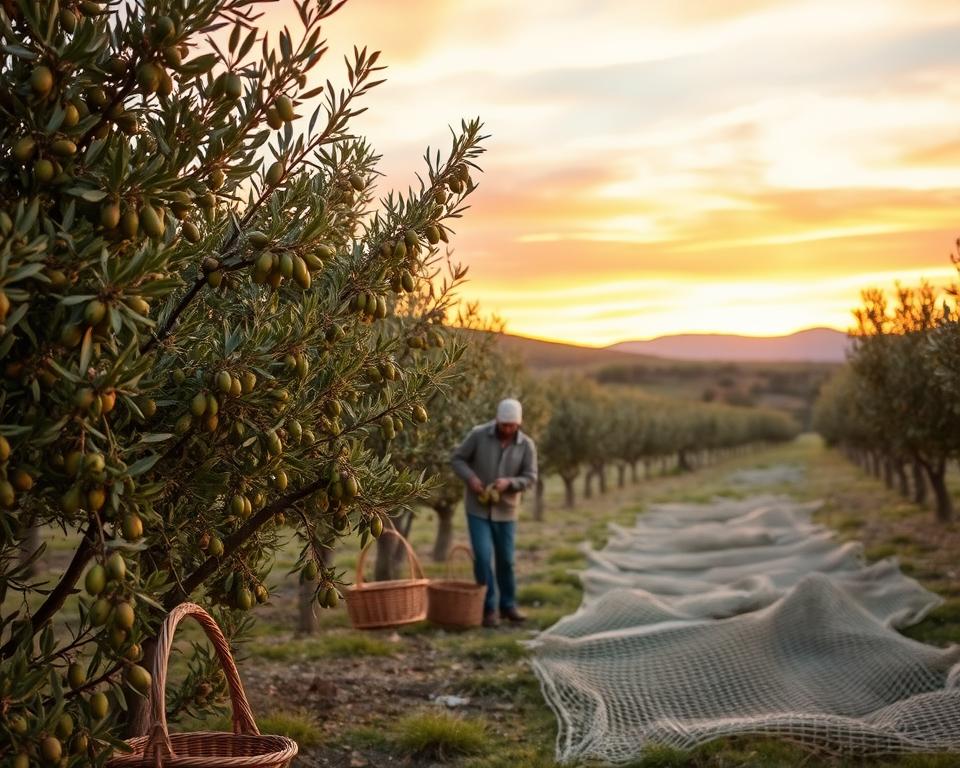
Olive harvesting tools and techniques have changed over time. In the past, people used their hands, rakes, and combs. Now, machines are used for efficiency and cost savings.
Mechanical harvesting uses machines to shake the trees. This makes the olives fall into a collection system. It’s great for big farms.
Hand-picking is better for small, high-quality groves. It’s more work but allows for careful picking and handling of the olives.
Traditional vs. Modern Harvesting Methods
Exploring olive farming shows us how harvesting techniques have changed over time. These changes come from tradition, technology, and the need for better ways to work.
Hand-Picking Olives: The Tradition
Hand-picking olives is hard work that needs a lot of care. This old method is loved by many for making high-quality olives. Farmers pick olives by hand, using rakes or their hands. This way, they can pick only the ripest olives, making them better.
Hand-picking is great for delicate olives or in places where machines can’t be used. It lets farmers check each olive, picking only the best.
Mechanical Harvesting: Pros and Cons
Mechanical harvesting has changed the olive industry by making it faster and cheaper. Machines shake the olives off the trees, catching them in nets or bags. It’s good for big farms because it works fast.
But, mechanical harvesting has its downsides. It can hurt the trees if not done right. It also risks picking olives that are not ripe or too ripe. Yet, many farmers use it because it’s efficient.
Choosing between hand-picking and machines depends on many things. These include the size of the farm, the type of olives, and what the farmer can do. Both ways have their good points and bad, showing how complex olive farming is.
Benefits of Choosing Locally Sourced Olives
Using locally sourced olives in your cooking can greatly improve flavor and help your community. By picking olives from your area, you boost the taste of your meals and support local businesses.
Supporting Local Farmers and Economies
Choosing local olives helps farmers and the local economy. This support can make farming more sustainable and keep the farming community strong.
“The local food movement is not just about food; it’s about community and the local economy. By choosing locally sourced olives, you’re part of this movement.”
A study showed that buying from local farmers can really help the local economy. Here’s a table showing the benefits:
| Economic Indicator | Locally Sourced Olives | Non-Local Olives |
|---|---|---|
| Local Farmer Revenue | $100,000 | $0 |
| Job Creation | 5 jobs | 0 jobs |
| Community Engagement | High | Low |
Freshness and Flavor in Your Cooking
Locally sourced olives are fresher because they travel less. This means they taste better in your dishes. Whether you’re making a classic Mediterranean dish or trying something new, the quality of your ingredients matters a lot.
Tips for Incorporating Locally Sourced Olives:
- Check local farmers’ markets for olive producers.
- Experiment with different olive varieties in your recipes.
- Consider preserving olives through pickling or curing to enjoy them year-round.
By choosing locally sourced olives, you improve your cooking and support a sustainable food system. As more people want high-quality, local ingredients, we can make a big difference for the environment and our communities.
The Journey from Orchard to Table
I’m really interested in how olives go from the orchard to my table. It’s not just about moving olives. It’s about the care, tradition, and new ideas that turn these fruits into tasty products we love.
Harvesting is the first step, and timing is key. Olives are picked when they’re ripe. This affects the quality of the oil. After picking, olives go to a facility for sorting, cleaning, and oil production.
Processing Olives: From Harvest to Oil
Turning olives into oil involves several steps. First, olives are crushed or pressed to get their oil. Then, the paste is mixed and separated into oil and solids. The oil’s quality depends on the olive type, ripeness, and processing methods.
Traditional vs. Modern Processing Techniques
There are many ways to process olives, from stone grinding to centrifugal extraction. Traditional methods make high-quality, extra virgin olive oil. But, modern techniques are faster and more consistent. The choice depends on the producer’s goals and the olives.
How Olive Oil Enhances Culinary Experience
Olive oil is more than a cooking ingredient. It’s a flavor enhancer that makes dishes special. Its rich taste adds depth to salads, pasta, and grilled meats. Plus, it’s healthy, full of good fats for the heart.
Cooking with Olive Oil
Choosing the right olive oil is key when cooking. Mild or light oils are good for high heat. But, robust extra virgin olive oil is perfect for dressings or low heat. Olive oil’s versatility and health benefits make it a favorite in kitchens everywhere.
Health Benefits of Olives and Olive Oil
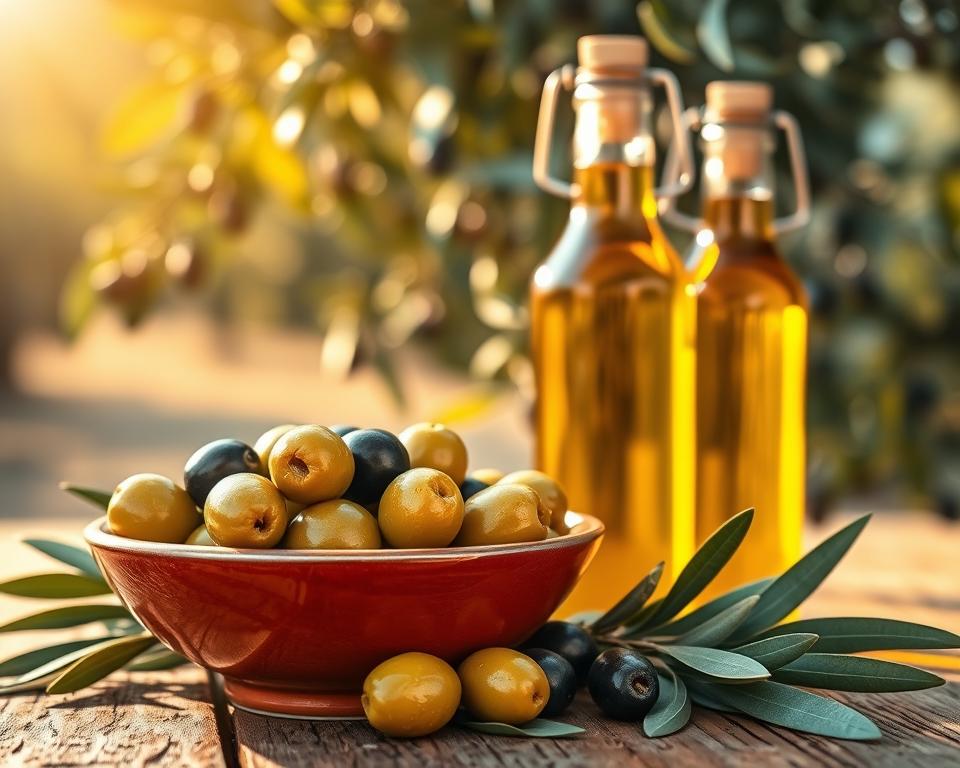
Olives and olive oil are packed with antioxidants and healthy fats. They are a tasty way to boost your health. Being a key part of Mediterranean cuisine, they help reduce inflammation and support heart health.
Nutritional Value and Components
Olives and olive oil are full of monounsaturated fats. These fats help lower bad cholesterol. They also have vitamin E, which protects cells. Plus, they have minerals like iron and copper for healthy red blood cells.
The nutritional value of olives and olive oil can change. It depends on the olive type, where they’re grown, and how they’re made. For example, olives from rich soil in Mediterranean agriculture areas are often more nutritious.
The Mediterranean Diet Connection
The Mediterranean diet is famous for its health perks. Olives and olive oil are key to this diet. They help lower heart disease, type 2 diabetes, and some cancers risk.
Olives and olive oil are more than just flavor in the Mediterranean diet. They’re also packed with nutrients. The way olives are grown, through olive grove maintenance, ensures their high quality.
Adding olives and olive oil to your meals is easy. Try drizzling olive oil on salads or using olives on pizzas. Enjoying them as a snack is simple too. These small changes can bring big health benefits from Mediterranean staples.
Sustainable Practices in Olive Farming
The olive farming industry is moving towards eco-friendly methods to lessen its environmental impact. With more people caring about the planet, there’s a growing need for olives and olive oil made sustainably.
This move towards sustainability is good for the planet and makes the olives taste better. Eco-friendly ways of picking olives can also boost their health benefits.
Eco-Friendly Harvesting Techniques
There are many ways to make olive farming greener. Some include:
- Using mechanical harvesters to cut down on labor and tree damage
- Implementing integrated pest management to cut down on chemicals
- Adopting precision agriculture to use water and fertilizer better
A study found that sustainable olive farming can cut the carbon footprint of olive oil by up to 50%.
“The future of olive farming lies in its ability to adapt to changing environmental conditions while maintaining the quality of its produce.”
Organic Olive Cultivation: An Overview
Organic olive farming is a big part of sustainable olive farming. It means growing olives without synthetic fertilizers, pesticides, or GMOs.
Benefits of Organic Olive Cultivation:
- Soil health gets better with natural fertilizers
- More biodiversity in and around olive groves
- Less chemicals in the final product
As more people want organic and sustainable food, olive farmers can profit by using eco-friendly methods.
Challenges Facing Olive Producers
Olive producers face many challenges. The harvesting olives process is complex. It’s influenced by the environment and the health of the trees.
Climate Change and Its Impact
Climate change is a big problem for olive production. It changes the weather and how trees grow. Producers are worried about the 2025 harvest because of the heat, costs, and market uncertainty.
You can learn more about this in an article on Olive Oil Times.
Climate change makes olive trees stressed. This can lead to fewer olives and lower quality. To fight this, producers use irrigation and grow trees that can handle drought better.
Pests and Diseases Affecting Olive Trees
Olive trees also face pests and diseases. These can hurt the yield and quality of olives. Pests like the olive fly and diseases like olive leaf spot can cause a lot of damage.
| Pest/Disease | Impact | Control Measures |
|---|---|---|
| Olive Fly | Damages olives, reducing yield and quality | Traps, biological control, insecticides |
| Olive Leaf Spot | Defoliation, reduced photosynthesis | Copper-based fungicides, pruning |
| Root Rot | Tree decline, reduced water uptake | Improved drainage, resistant rootstocks |
Managing pests and diseases is key for healthy trees and a good olive tree picking season. Producers use many methods to keep their trees healthy. This includes cultural practices, biological controls, and chemical treatments.
Celebrating Olive Harvest Festivals in the U.S.
Olive harvest festivals are a great way to see the rich culture of olive farming in the U.S. These events not only highlight the olive harvest. They also bring people together, fostering social connections and a sense of community.
Festival Highlights
In the U.S., festivals like the Olive Harvest Festival in Corvallis, Oregon, and the Temecula Olive Oil Festival in California are notable. They offer olive oil tastings, cooking demos, and tours of olive farms. This gives a unique chance to learn about olive farming techniques.
Community Spirit
During the olive harvest season, communities unite to celebrate. Local farmers, artisans, and food lovers come together. They share their love for olive oil and food. By joining these festivals, visitors can feel the warmth and hospitality of these communities.