


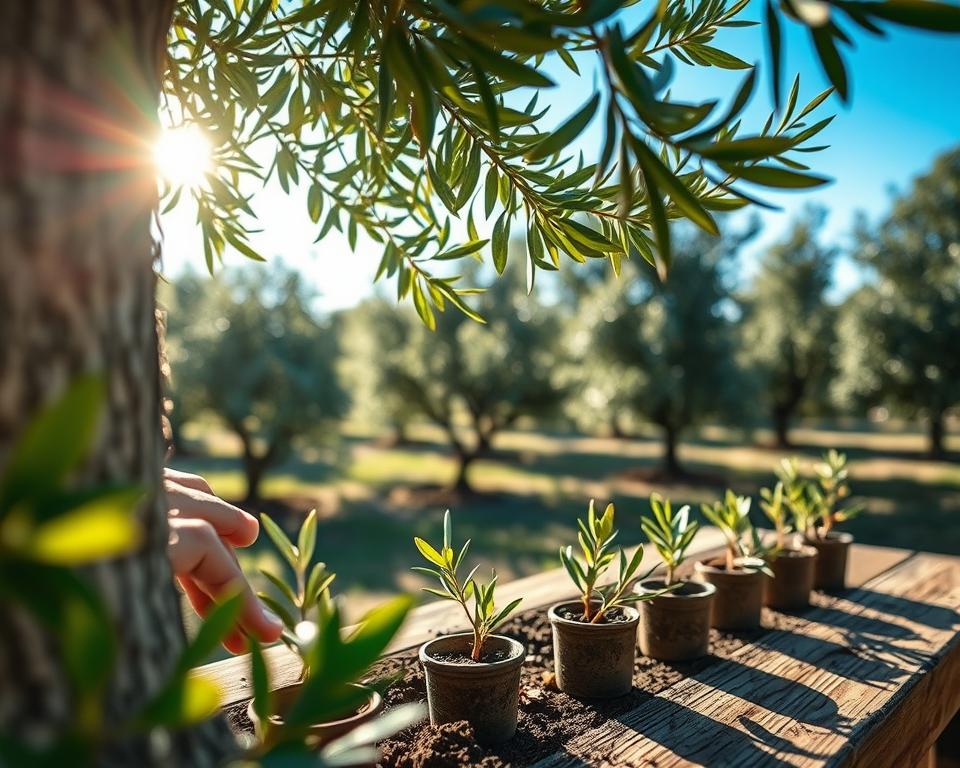
Growing your own olive trees is rewarding. It’s easier than you think with the right guidance. Did you know one olive tree can make over 10 liters of olive oil each year? This shows how great it is to grow your own trees.
As a beginner, knowing the basics of propagation is important. In this guide, I’ll show you how to grow olive trees. We’ll cover the key steps and methods for success.
Key Takeaways
- Learn the different types of olive trees suitable for propagation.
- Understand the various methods of olive tree propagation.
- Discover the essential steps for successful olive tree cultivation.
- Get tips on how to care for your newly propagated olive trees.
- Explore common challenges and how to overcome them.
Understanding Olive Trees and Their Needs
Olive tree propagation starts with knowing the trees and what they need to grow well. As I explore olive cultivation, I see that not all olive trees are the same. Their differences are key to successful propagation.
Types of Olive Trees for Propagation
There are many olive tree varieties, each with its own traits and benefits. Some top choices for propagation include:
- Arbequina: Known for its cold hardiness and high productivity.
- Koroneiki: A Greek variety famous for its high-quality oil.
- Frantoio: An Italian variety that’s adaptable and makes great oil.
When picking a variety for propagation, think about climate tolerance, disease resistance, and olive use (oil, table olives, or both).
Ideal Growing Conditions
Olive trees do best in a Mediterranean-like climate. Important factors include:
| Condition | Ideal Requirement |
|---|---|
| Climate | Mild winters, hot summers |
| Soil | Well-draining, slightly acidic to neutral pH |
| Sunlight | Full sun, at least 6 hours of direct sunlight |
Knowing these conditions helps pick the best spot for planting. It also ensures the trees get the care they need to grow strong.
Methods of Olive Tree Propagation
There are several ways to grow olive trees, each with its own benefits and challenges. Knowing these methods can help both experienced gardeners and beginners make better choices.
Seeds vs. Cuttings
Two main methods are using seeds and cuttings. Olive tree propagation from seeds is traditional but has its downsides. Seeds grow slowly, and the new trees might not look like the parent tree.
Olive tree cutting propagation is more popular. It involves taking parts from a grown tree and making them grow roots. This method is quicker and more reliable, as the new tree will be a clone of the parent.
| Method | Time to Maturity | Reliability |
|---|---|---|
| Seeds | 3-5 years | Low |
| Cuttings | 1-2 years | High |
Grafting as a Propagation Method
Grafting is another way to grow olive trees. It joins a stem piece (scion) from one tree to another’s roots (rootstock). This method is great for mixing good traits from different trees.
Grafting needs skill and knowledge but can be very effective. The key is to match the scion and rootstock well and graft correctly.
Preparing for Olive Tree Propagation
Before starting olive tree propagation, it’s key to prepare well. You need the right tools and to pick healthy parent plants. This will help you grow olive trees at home successfully.
Choosing the Right Tools
Having the right tools is essential for olive tree propagation. You’ll need a sharp knife or pruning saw, rooting hormone, pots, and a good potting mix. Quality tools make the process easier and more effective.
- A sharp knife or pruning saw for taking cuttings
- Rooting hormone to stimulate root growth
- Pots or containers with drainage holes to prevent waterlogged soil
- A well-draining potting mix to support healthy root development
Selecting Healthy Parent Plants
Choosing healthy parent plants is critical for olive tree propagation. Look for plants that are disease-free and fit your local climate. A healthy parent plant boosts your new olive trees’ chances of thriving.
| Characteristics | Description | Importance |
|---|---|---|
| Disease-free | Free from pests and diseases | High |
| Good structure | Well-shaped and balanced | Medium |
| Climate suitability | Suitable for your local climate | High |
“The quality of the parent plant directly affects the health and viability of the propagated olive trees.”
By choosing the right tools and selecting healthy parent plants, you can successfully propagate olive trees. Enjoy the benefits of growing your own olive trees at home.
Step-by-Step Guide to Propagating from Cuttings
Propagating olive trees from cuttings is easy when you break it down. This method lets you grow trees that are just like the original. It’s a favorite among gardeners and growers.

Taking Cuttings
Start by picking healthy branches from the parent tree. It’s best to do this during its dormant season. Cuttings should be 4-6 inches long and have two nodes.
Make clean cuts just above a node. This is where roots are most likely to grow.
For more details, check out this guide on propagating olive trees from cuttings. It offers a lot of helpful information.
Preparing Cuttings for Rooting
After taking your cuttings, prepare them for rooting. Remove lower leaves, leaving a few at the top. This helps prevent water loss and keeps the cutting moist.
Dip the cut end into a rooting hormone to help roots grow. Then, plant it in a potting mix that drains well.
Keeping the area humid and warm is key for successful rooting. Use a clear plastic bag to cover the pot. This creates a humid environment that helps roots grow.
Timing Your Planting
The timing of your planting is important. In most areas, the late winter or early spring is the best time. This is when the tree is dormant.
Be patient and keep an eye on your cuttings. With the right care, you’ll see roots and new growth in a few weeks.
The Role of Soil in Olive Tree Growth
Understanding what soil olive trees need is key to their growth and life span. We talked about how important the right soil is for growing olive trees in previous sections.
Soil gives olive trees the nutrients, water, and support they need. A balanced soil mix can greatly affect your olive trees’ health and how well they produce.
Best Soil Mix for Olive Trees
A good soil mix for olive trees has to have some key traits. It should drain well to avoid waterlogged soil, which harms olive trees. The best mix usually includes:
- Compost for nutrients
- Perlite or sand for better drainage
- A pH between 6.5 and 8.5 for balance
What makes a good soil mix?
- It should drain well to prevent root rot
- It needs to be aeration-friendly for healthy roots
- It should have enough nutrients
Importance of Drainage
Drainage is very important for olive trees because they can get root rot in wet soil. Making sure your soil mix drains well is key to your trees’ health.
How to ensure good drainage?
- Add organic matter like compost
- Use perlite or sand in your mix
- Stay away from heavy clay soils that hold too much water
By focusing on a well-draining soil mix, you can greatly boost your chances of success with olive tree propagation.
Watering and Care for New Olive Trees
Growing olive trees at home starts with knowing how to water them right. It’s key for their survival and growth. I’ll show you how to water them well and spot when they need more or less water.
Initial Watering Schedule
When you plant your olive tree cuttings, keep the soil moist. Water them right after planting and keep the soil damp but not soggy for a few weeks. As they grow, water them less often. Water when the top inch of soil feels dry.
Tips for Successful Watering:
- Water your olive trees in the morning to minimize evaporation.
- Avoid getting water on the leaves to prevent fungal diseases.
- Use a well-draining potting mix to prevent waterlogged soil.
Signs of Overwatering or Underwatering
Keep an eye on your olive trees for signs of too much or too little water. Too much water can cause root rot, while too little can slow them down. Watch for these signs:
- Yellowing leaves or droopy branches may indicate overwatering.
- Wilting or crispy leaves can be a sign of underwatering.
- Slow growth or no new growth may suggest inadequate watering.
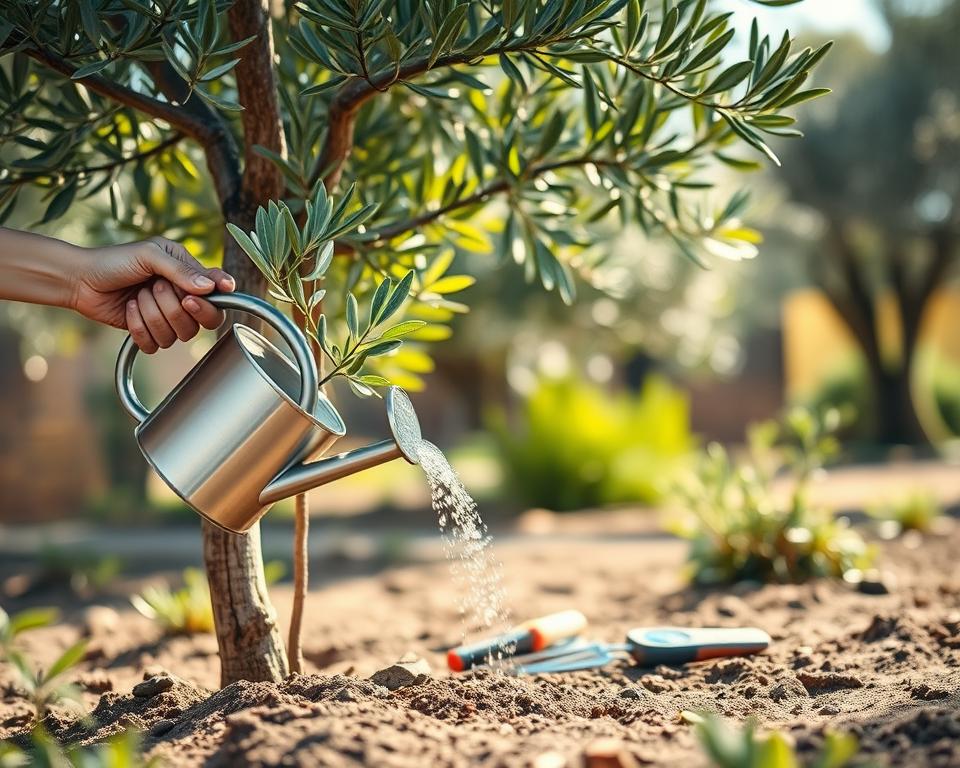
By following these tips and watching your olive trees’ needs, you’ll do great. Remember, healthy olive trees need balanced care. This includes the right amount of water, sunlight, and soil.
Sunlight Requirements for Olive Trees
Exploring olive tree cultivation shows sunlight’s key role. It can greatly affect your success. Olive trees love sunny spots, but how much sun they need varies.
Ideal Light Conditions
Olive trees need full sun to partial shade. They should get at least 6 hours of direct sunlight daily. In warmer places, some shade helps avoid burning.
It’s vital to find the right balance of sunlight and shade for your trees.
Container-grown olive trees are easier to manage. You can move them to change their sun exposure. For trees planted in the ground, picking the right spot is essential.
Managing Sun Exposure
Controlling sun exposure is key, more so in sunny climates. Use shade cloth or natural shade in the afternoon to protect your trees.
Watch for signs of sun stress like leaf scorch. If you see these, add more shade or move the trees to a sunnier area.
“Olive trees love sunlight, but they can suffer if it’s too intense. Finding that balance is key to their success.”
To sum up, here’s a table on olive tree sunlight needs:
| Climate | Ideal Sunlight Hours | Additional Measures |
|---|---|---|
| Warm | 6-8 hours | Provide shade during peak sun hours |
| Cooler | 8+ hours | Ensure full sun exposure |
Understanding and managing sunlight for your olive trees can greatly boost their growth and fruit production.
Fertilization of Olive Trees
Olive tree fertilization is key for their growth. It gives them the nutrients they need. Fertilizing right can boost their health and growth.
When to Fertilize
Fertilizing at the right time is important. Do it in late winter to early spring. This gives them nutrients for the growing season. Avoid fertilizing during the hottest summer months when they are stressed.
Young olive trees need a balanced fertilizer. It should have equal parts nitrogen, phosphorus, and potassium (N-P-K). As they grow, their needs may change. Watch how they react to fertilizers.
Types of Fertilizers Suitable for Olive Trees
There are many fertilizers for olive trees, organic and synthetic. Organic fertilizers like compost or manure are slow to release nutrients. They also improve soil health. Synthetic fertilizers give quick nutrients but use them carefully to avoid over-fertilizing.
Choose a fertilizer based on your soil and tree needs. A soil test can show what nutrients are lacking. 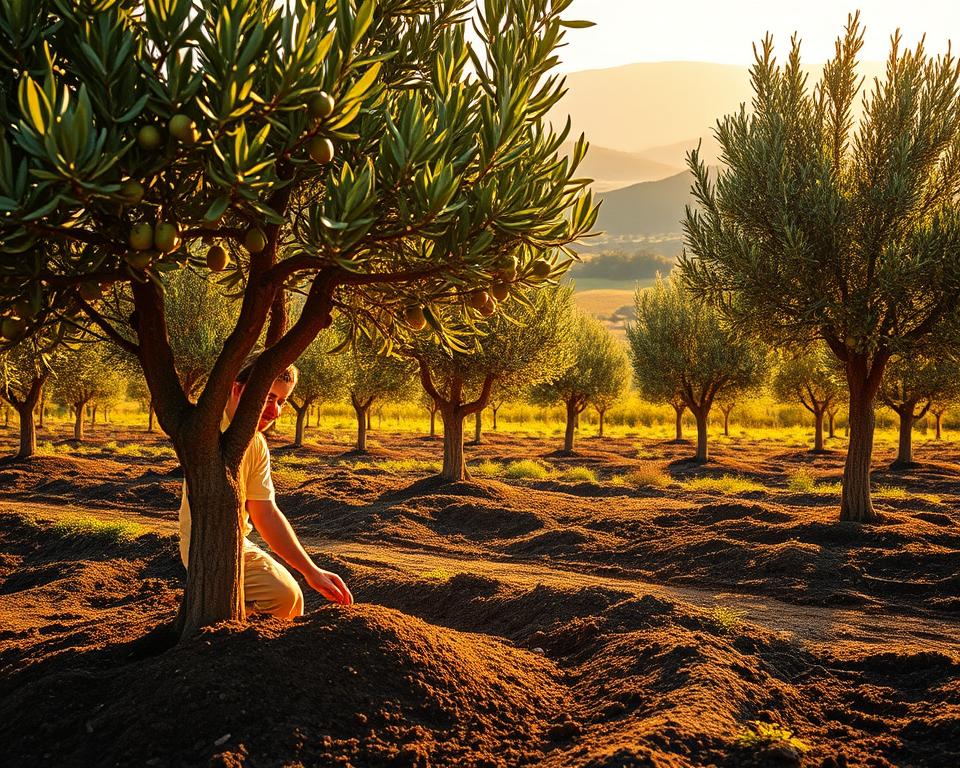
- Consider using a slow-release fertilizer to provide nutrients over an extended period.
- Be cautious of over-fertilizing, as this can lead to more harm than good.
- Monitor your olive trees’ response to fertilization and adjust your fertilization schedule as needed.
Common Challenges in Olive Tree Propagation
Propagating olive trees can be rewarding but comes with challenges. Knowing these issues helps you tackle them and ensure success. Growing olive trees at home can be a fulfilling experience.
Pests and Diseases
Dealing with pests and diseases is a big challenge in olive tree propagation. Common pests include:
- Scale insects: These tiny insects feed on the sap, weakening the tree.
- Aphids: Aphids are small, soft-bodied insects that spread disease and damage the tree.
- Olive fruit fly: The larvae of this fly feed on the fruit, causing damage and reducing yield.
To manage pests, monitor your trees regularly. Use organic or integrated pest management (IPM) strategies when needed. Regular inspection and maintenance can prevent infestations.
Diseases like root rot, leaf spot, and verticillium wilt can also affect olive trees. Good air circulation, avoiding overwatering, and using disease-free planting material can help mitigate these risks.
Environmental Stressors
Environmental stressors, such as extreme temperatures, drought, and poor soil conditions, can impact olive tree propagation. Young olive trees are vulnerable to frost, so protecting them during cold snaps is essential.
To minimize environmental stressors, consider these tips for successful Olive Tree propagation:
- Choose a propagation site with good air circulation and protection from extreme weather conditions.
- Use a well-draining soil mix to prevent waterlogged soil.
- Water your trees regularly, but avoid overwatering, which can lead to root rot.
Understanding these challenges and taking steps to mitigate them can improve your chances of success. Regular monitoring and maintenance are key to overcoming these challenges and enjoying a healthy and productive olive tree.
Harvesting and Caring for Mature Olive Trees
After successfully growing your olive trees, it’s time to enjoy the fruits of your labor. If you used Olive Tree cutting propagation, the wait is over. Mature olive trees need ongoing care to stay healthy and productive.
Recognizing Harvest Time
Olive trees take a few years to mature after you start growing them. The time to harvest varies by type, but usually, it’s in the fall. To check if olives are ripe, gently pull on them; ripe ones come off easily.
For more tips on caring for your olive trees, visit Promise Supply’s care guide.
Ongoing Maintenance Tips
To keep your olive trees healthy, give them well-draining soil, plenty of sunlight, and regular water. Fertilize once a year with a balanced, slow-release fertilizer. Prune your trees often to encourage growth and fruit.
By following these tips, you’ll enjoy a rich harvest from your olive trees for many years.